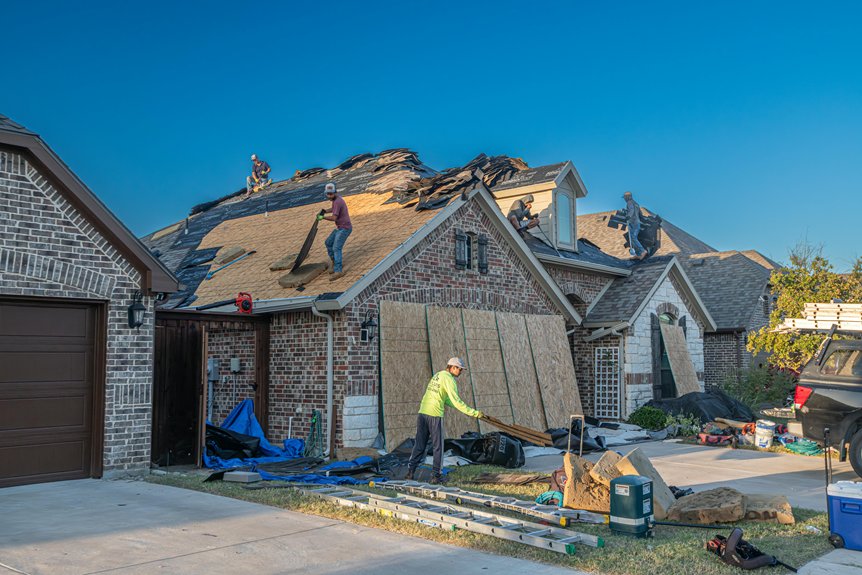
Knowing when to schedule a roof replacement in Norman, OK, can save you from costly repairs and unexpected leaks. Weather plays a big role, especially after storms or as your roof ages. Recognizing signs of damage early and understanding local conditions can help you plan ahead. But how do you ascertain the right time? There are key factors to consider that could make all the difference in protecting your home—factors you won’t want to overlook.
Recognizing Visible Signs of Roof Damage
Your roof often shows signs of damage before more serious issues develop, so it’s important to know what to look for. One of the first clues is shingle deterioration, which can appear as curling, cracking, or missing shingles. These signs indicate that your roof’s protective layer is weakening.
Additionally, watch for leak indicators inside your home, such as water stains on ceilings or walls, especially after heavy rain. Exterior signs like granule loss in gutters or bald patches on shingles also point to damage.
Regular inspections by experienced professionals can help identify local weather challenges that accelerate roof deterioration, ensuring timely repairs. Addressing these visible issues early can prevent leaks and more costly repairs down the line. Regular inspections help catch these warning signs before they turn into major problems, ensuring your roof remains durable and reliable.
Understanding Norman’s Weather Impact on Roof Longevity
Norman’s weather conditions considerably influence how long your roof lasts. Frequent hailstorms can cause hail damage, weakening shingles and compromising your roof’s protective barrier. Over time, repeated hail impacts lead to cracks and punctures, accelerating deterioration. Trusted roofing experts in Oklahoma can help assess and address storm-related damage before it worsens. Wind erosion also plays a significant role, especially during storms, as strong winds lift and strip away shingles or roofing materials. This erosion exposes underlying layers to the elements, increasing the risk of leaks and structural damage. Additionally, Oklahoma’s weather swings—hot summers and cold winters—cause expansion and contraction of roofing materials, further stressing your roof’s integrity. Understanding these weather impacts helps you recognize when your roof might be nearing the end of its lifespan and highlights the importance of regular inspections and maintenance.
Monitoring the Age of Your Roof
Keeping track of your roof’s age is essential for maintaining its integrity and planning timely repairs or replacements. Knowing the roof material lifespan helps you estimate when your roof might need attention.
For example, asphalt shingles typically last 20-25 years, while metal or tile roofs can endure 50 years or more. Regularly monitoring the age of your roof allows you to adjust maintenance frequency accordingly, preventing minor issues from becoming major problems.
Keep records of when your roof was installed and schedule inspections every few years to assess its condition. Staying proactive ensures you’re not caught off guard by unexpected failures and helps you determine the right time to contemplate a replacement before costly damage occurs.
Assessing Recent Storm and Weather Damage
After a storm passes through Norman, it’s vital to examine your roof for damage, as severe weather can compromise its integrity even if no obvious issues are immediately visible. Storm damage from hail, high winds, or heavy rain can cause shingles to crack, loosen, or lift, creating vulnerabilities.
Look for missing or broken shingles, dents, or granule loss. Weather impact can also lead to leaks or water stains inside your home, signaling hidden damage.
Keep an eye out for debris on your roof or in gutters, as these may indicate underlying problems.
Promptly evaluating storm damage helps prevent minor issues from escalating into major repairs or early replacement. Regular inspections after severe weather ensure your roof remains secure and extends its lifespan.
Timing Your Roof Replacement for Optimal Benefits
Timing your roof replacement carefully can maximize its benefits and save you money in the long run. By planning ahead, you guarantee your new roof aligns with favorable weather conditions, reducing installation delays and potential damage.
Consider the material lifespan—many roofing warranties specify the best time to replace your roof to maintain coverage. Replacing your roof before significant deterioration occurs helps preserve warranty validity and prevents costly repairs down the line.
Avoid waiting until leaks or storm damage force urgent replacements, which often come with higher costs and compromised quality. The ideal timing balances weather, your budget, and warranty terms, so you get the most out of your investment while enjoying a durable, long-lasting roof.
Conclusion
To keep your home protected, don’t wait until damage worsens. Regular inspections, especially after storms, help catch issues early. Plan your roof replacement before it reaches the 20-25 year mark or shows signs of aging. Scheduling during mild weather guarantees a smooth install and minimizes disruptions. Being proactive now means you’ll enjoy peace of mind, knowing your roof is sturdy and ready to face Norman’s weather challenges for years to come. For more information on how to schedule your free roof inspection, call us at (405) 543-2920 or visit us online at Top View Roofing.