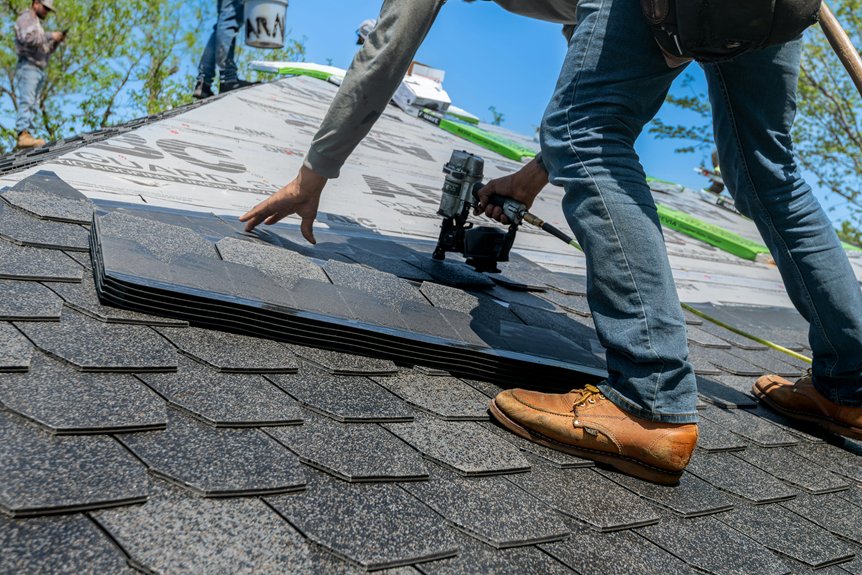
If you’re planning a roof replacement in Jones, OK, knowing what to expect can help ease any concerns. From initial assessments to the final cleanup, each step guarantees your home is protected and built to last. But understanding the process in detail is key to making informed decisions and avoiding surprises. Let’s explore what happens during a typical roof replacement and how it benefits your property.
Assessing Your Roof’s Condition
Before deciding on a roof replacement, it’s essential to evaluate your roof’s current condition. Weather considerations play a big role in this assessment. If your roof has experienced frequent storms, hail, or heavy rain, it might be more worn than you realize.
Look for signs like curling shingles, missing tiles, or water stains on ceilings. These issues can shorten your roof’s lifespan and signal the need for replacement. Also, check for granule loss in shingles, which indicates aging.
A roof nearing its expected lifespan—typically 20 to 25 years—may require replacement sooner if weather patterns have accelerated wear. Regular inspections help you catch problems early, saving money and preventing more extensive damage down the line. Proper roofing materials and regional expertise also contribute to the longevity of your roof, especially in areas prone to severe weather.
Selecting the Right Materials and Design
Choosing the right materials and design for your roof guarantees durability, energy efficiency, and visual appeal. When selecting materials, consider their resilience to withstand Jones, OK’s weather conditions, like heavy rain or hail. Material options such as asphalt shingles, metal, and clay tiles each offer unique benefits, so pick one that fits your climate and budget. Color options also play a role, not only in enhancing your home’s curb appeal but in reflecting heat to improve energy efficiency. A well-chosen design aligns with your home’s architecture, ensuring the roof complements the overall look while providing long-lasting protection. Carefully balancing material durability, style, and color options helps ensure your roof remains functional and attractive for years to come. Considering local climate conditions during material selection can further enhance your roof’s longevity and performance.
Obtaining Necessary Permits and Approvals
To guarantee your roof replacement complies with local regulations, you’ll need to obtain the necessary permits and approvals from your Jones, OK, city or county authorities.
The permit process involves submitting an application that details your project, including materials and scope. Local regulations aim to ensure safety, building codes, and community standards are met.
It’s essential to start this process early, as permits can take time to approve. Failing to secure the proper permits may result in fines, delays, or even having to undo work.
Contact your local building department or code enforcement office to understand specific requirements.
Preparing Your Property for the Project
Once you’ve secured the necessary permits and approvals for your roof replacement, preparing your property guarantees the project proceeds smoothly. Start by clearing the area around your home, removing outdoor furniture, potted plants, and debris that could obstruct access.
Ensure your gutters are clean and properly aligned; this helps prevent water drainage issues during and after the replacement. Additionally, check your roof ventilation system, making sure vents are unobstructed to support proper airflow and prevent moisture buildup.
If needed, temporarily relocate vehicles and outdoor equipment away from the work zone to allow easy access for contractors. Communicating these preparations ensures the crew can work efficiently, reducing delays and safeguarding your property during the roof replacement process.
The Removal of the Old Roof
As the removal process begins, the roofing team will carefully strip away the existing shingles, flashing, and underlayment.
You’ll notice a flurry of roofing debris falling onto your yard, so safety precautions are vital.
The crew will use specialized tools to lift and remove damaged materials efficiently, minimizing the risk of accidents.
They’ll also take care to prevent debris from scattering into your home or surrounding areas.
Safety gear, such as gloves, goggles, and harnesses, is worn at all times to protect everyone involved.
Once the old roof is fully removed, the area will be cleared of debris and inspected for any underlying issues.
This step ensures a solid foundation for the new roofing layers and keeps safety top of mind throughout the process.
Installing the New Roof Layers
With the old roofing materials removed, the crew begins installing the new layers, starting with a fresh underlayment that provides a waterproof barrier.
Proper roof ventilation is vital at this stage; vents are installed to guarantee airflow and prevent moisture buildup. This helps extend the roof’s lifespan and improves energy efficiency.
As they lay down the new sheathing, they may also incorporate insulation upgrades, which enhance your home’s thermal performance and reduce heating and cooling costs.
The layers are carefully aligned and secured to guarantee stability. Attention to detail during this phase ensures the roof will be durable and resistant to the elements.
Once the layers are in place, the crew prepares for the final roofing materials, completing the installation process.
Conducting Quality Checks During Installation
Conducting quality checks during installation is essential to guarantee that every layer of your new roof meets safety and durability standards. You should verify proper installation of roof ventilation systems to ensure adequate airflow and prevent moisture buildup, which can cause damage over time.
Inspect each shingle or roofing material to confirm it’s correctly aligned and securely fastened. This helps prevent leaks and extends your roof’s lifespan. Additionally, these checks ensure that the work complies with manufacturer requirements, safeguarding your warranty coverage.
Regular inspections during installation catch issues early, saving you from costly repairs later. By staying involved and attentive, you help ensure your new roof provides optimal performance, safety, and peace of mind for years to come.
Final Inspection and Cleanup
Once the installation is complete, performing a thorough final inspection guarantees everything is up to standard before you sign off. During this step, you’ll check for any remaining debris, loose nails, or minor imperfections, ensuring your new roof meets quality standards.
Confirm that all work aligns with the contract and that the project complies with safety regulations. This is also the time to review your roof warranty details, making sure you understand coverage and maintenance requirements.
Proper cleanup is essential to prevent future issues. If you’re concerned about costs, verify your financing options are in place.
Once satisfied, you can confidently approve the work, knowing your investment is protected and your home is ready for the future.
Addressing Any Post-Installation Concerns
After the installation is complete, it’s important to promptly address any concerns that may arise. Review your post installation warranty details carefully, so you know what coverage is available if issues develop shortly after the project finishes.
If you notice leaks, damaged shingles, or other problems, contact your contractor right away to resolve these concerns under warranty.
Additionally, discussing long term maintenance with your roofer can prevent future issues and extend your roof’s lifespan. Regular inspections and minor repairs help ensure your new roof performs well over time.
Don’t ignore early signs of trouble; addressing concerns promptly saves money and stress. Staying proactive with warranty claims and maintenance keeps your investment protected and your home secure.
Maintaining Your New Roof for Longevity
To guarantee your new roof lasts for many years, regular maintenance is essential. Start by inspecting your roof periodically for damaged or missing shingles, which can compromise its weatherproofing. Clean debris like leaves and branches to prevent water buildup that could lead to leaks. Keep gutters clear to ensure proper drainage.
Schedule professional roof maintenance annually to identify potential issues early. Proper weatherproofing is crucial; ensure flashing and seals remain intact to protect against moisture infiltration. Address any repairs promptly to prevent small problems from becoming costly repairs later.
Regular upkeep not only extends your roof’s lifespan but also maintains its appearance and performance. By staying proactive with roof maintenance, you’ll maximize your investment and enjoy peace of mind during Oklahoma’s unpredictable weather.
Conclusion
Once your roof replacement is complete, you’ll have peace of mind knowing your home is protected against Oklahoma’s weather. Trust that the professionals have thoroughly inspected, installed, and cleaned up, ensuring everything is working perfectly. Keep an eye on your new roof and schedule regular maintenance to extend its lifespan. For more information on how to schedule your free roof inspection, call us at (405) 543-2920 or visit us online at Top View Roofing. With proper care, your new roof will provide reliable coverage and peace of mind for years to come.