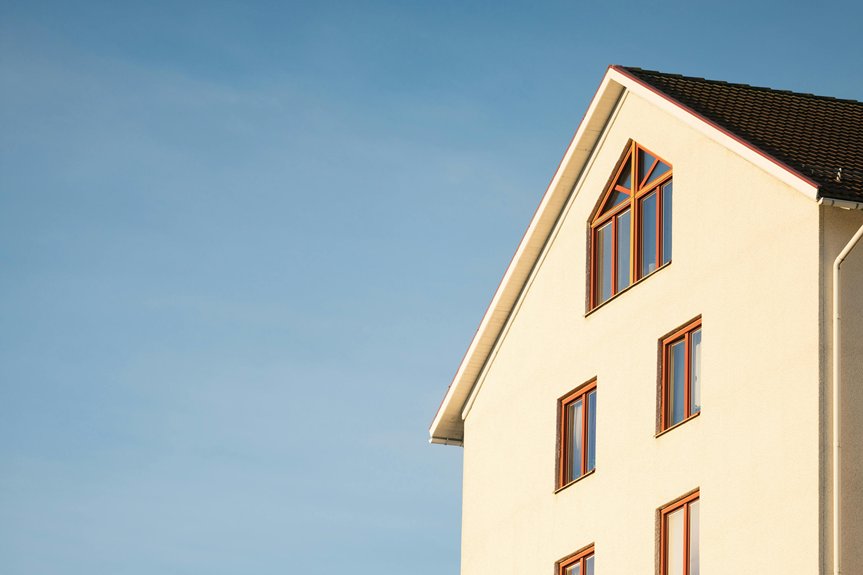
Your house roof’s structure includes essential components like framing (trusses and rafters) that distribute weight evenly and provide support, along with a deck that serves as a base for roofing materials. The covering—such as shingles or metal panels—protects against weather, while ventilation systems and insulation work together to prevent moisture buildup and temperature extremes. Understanding these elements guarantees your roof remains durable amidst Yukon’s climate, and ongoing maintenance helps you master its key features.
What Are the Main Components of a House Roof?
Understanding the main components of a house roof is essential for homeowners, especially when considering maintenance or repairs. The roof’s primary elements include the roof covering, which features the roof color; this impacts both aesthetics and UV protection. The roof covering can consist of shingles, metal panels, or tiles, all chosen based on durability and style.
Beneath this, the roof deck provides structural support, serving as the foundation for the coverings. Gutter systems are integral components, positioned along the roof’s edge, facilitating water runoff and preventing water damage to the structure. Properly designed gutters channel rainwater away from the roof and foundation, reducing leak risks and erosion.
Rafters and trusses form the framework, supporting the roof deck and covering. Ventilation components, such as soffit vents, ensure airflow, preventing moisture buildup. Regional weather considerations influence these components’ design and materials to withstand local challenges like storms and winter conditions. Collectively, these elements work in harmony, maintaining the roof’s integrity and protecting your home from weather elements.
How Do Roof Trusses and Framing Provide Support?
Roof trusses and framing are the structural backbone that support the entire roof system, distributing loads evenly across the walls and foundation. Roof truss design involves precise calculations to guarantee stability, using triangular configurations that efficiently transfer weight from the roof to load-bearing walls.
These trusses are prefabricated using specific framing techniques, such as webbing and chord members, which optimize strength while minimizing material use. The framing techniques used in creating the roof structure ensure that forces like snow, wind, and gravity are evenly distributed, preventing sagging or structural failure.
Properly designed roof trusses provide a rigid framework that resists lateral forces and maintains the shape of the roof over time. The integration of these components allows your roof to withstand environmental stresses, ensuring durability and safety.
Skilled engineering and framing techniques are essential for creating a resilient, long-lasting support system for your Yukon OK home.
What Types of Roofing Materials Are Common in Yukon OK?
In Yukon, OK, homeowners commonly select roofing materials that balance durability, weather resistance, and cost-efficiency to withstand the area’s variable climate. Asphalt shingles remain the most prevalent due to their affordability, ease of installation, and proven weatherproofing capacity.
Metal roofing, especially steel or aluminum, offers superior longevity and resilience against high winds and hail, making it ideal for the region’s storm-prone conditions.
For sustainable energy solutions, many homeowners are integrating solar panels with their roofs; these systems require compatible, durable roofing materials like standing seam metal or reinforced asphalt to support their weight and mounting hardware.
Additionally, some property owners are exploring rooftop gardens, which demand a strong, well-insulated roofing substrate that can support additional load and provide proper drainage.
The choice of roofing material directly impacts the longevity and functionality of these features, emphasizing the importance of selecting a system suited to Yukon’s climate and lifestyle needs. Trusted roofing experts in Oklahoma can help homeowners choose the best materials for their specific needs and ensure a reliable, long-lasting roof.
How Does Insulation and Ventilation Protect Your Roof?
Proper insulation and ventilation work together to regulate your roof’s temperature and minimize moisture buildup, preventing structural damage.
Effective airflow removes excess heat and humidity, reducing the risk of ice dams and mold growth.
Moisture Control Benefits
Effective moisture control is essential for maintaining the integrity and longevity of your roof system. Proper insulation and ventilation work together to prevent excess moisture buildup, which can lead to wood rot, mold, and compromised roof decking integrity.
By managing indoor humidity and ensuring adequate airflow, you reduce the risk of condensation forming on roof sheathing. Additionally, regular gutter maintenance directs water away from the structure, preventing leaks that can introduce moisture into the roof assembly.
Moisture control also minimizes the risk of ice dams in colder months, which can cause water seepage and damage. Overall, a well-designed moisture management system preserves your roof’s structural strength, protects your investment, and ensures your home remains safe and dry for years to come.
Airflow and Temperature
Maintaining ideal airflow and temperature regulation within your roof system is essential for preventing structural damage and ensuring longevity. Proper ventilation systems, including soffit and ridge vents, facilitate continuous airflow, which helps dissipate heat and moisture buildup in the attic space.
Adequate attic insulation minimizes heat transfer during winter and prevents overheating in summer, working in tandem with ventilation to stabilize temperatures. When airflow is insufficient, moisture can condense, leading to mold growth and wood rot, while temperature extremes cause material stress.
A well-designed ventilation system maintains a balanced environment, reducing ice dams and extending roof lifespan. Ensuring your attic insulation and ventilation systems are properly installed and maintained is key to protecting your roof’s structural integrity over time.
How to Recognize Signs of Roof Damage or Wear?
How can you tell if your roof is showing signs of damage or wear? Start by inspecting your gutters; clogged or overflowing gutters often indicate roof issues, as debris can cause water backup, leading to leaks. Look for shingle deterioration, such as curling, cracking, or missing shingles, which compromise the roof’s protective barrier.
Check for granule loss in your gutters or downspouts—excess granules suggest shingle wear. Examine the roof surface for bald spots or uneven areas, indicative of weathering or physical damage. Inside, look for water stains or dark streaks on ceilings and attic insulation, signaling leaks.
Also, inspect flashing around vents and chimneys for rust or gaps, where water infiltration can occur. Regular gutter maintenance and prompt repair of deteriorated shingles are vital to prevent further damage. Recognizing these signs early helps maintain your roof’s integrity and extends its lifespan.
Why Regular Roof Inspections Are Essential for Yukon Homeowners
Regular roof inspections are essential for Yukon homeowners because they enable early detection of damage that can compromise structural integrity and lead to costly repairs.
A thorough roof maintenance routine involves following an inspection checklist that covers key components such as shingles, flashing, gutters, and ventilation systems. Regular assessments help identify issues like missing or damaged shingles, degraded flashing, or clogged gutters, which can accelerate deterioration if left unchecked.
Conducting inspections after severe weather events ensures you catch problems early, preventing leaks and water intrusion. A detailed inspection checklist guides you to systematically evaluate each element, reducing the risk of overlooked vulnerabilities.
Conclusion
Understanding your roof’s structure helps you identify potential issues early and maintain its integrity. Regular inspections, knowledge of materials, and awareness of signs of damage guarantee your roof remains durable against Yukon’s climate challenges. Proper support from trusses and framing, combined with adequate insulation and ventilation, prolongs roof lifespan and prevents costly repairs. Staying informed and proactive ensures your home remains safe, energy-efficient, and well-protected through all seasons. For more information on how to schedule your free roof inspection, call us at (405) 543-2920 or visit us online at Top View Roofing.