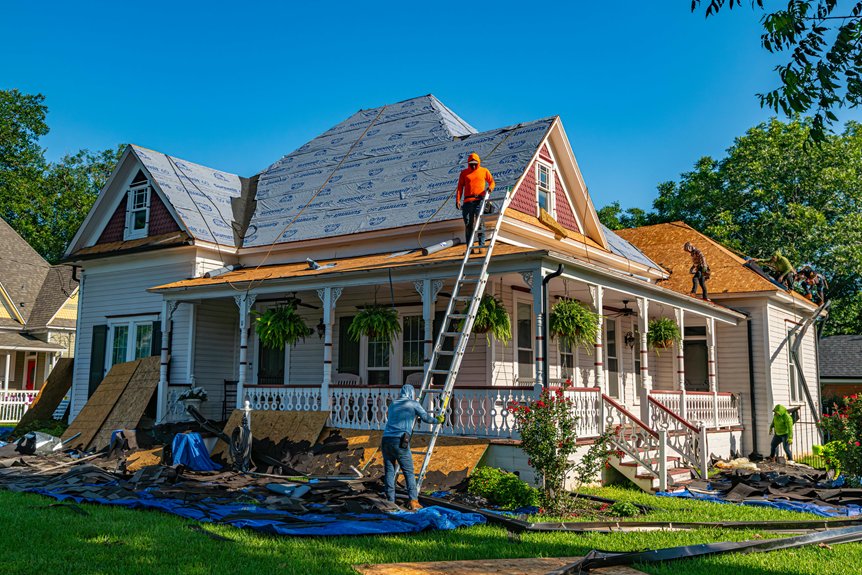
When deciding between repairing or replacing your rusted steel roof in Oklahoma City, assess the rust severity and structural impact. Light surface rust may respond well to cleaning and coatings, while extensive or deep corrosion often requires full replacement to guarantee safety and durability. Factors like insulation, warranty, and long-term costs influence your choice. Understanding these details helps you make an informed decision—continue exploring to learn how to choose the best solution for your roof’s condition.
Understanding the Severity of Rust Damage on Steel Roofs
Rust damage on steel roofs can considerably compromise their structural integrity if not identified and addressed promptly. Evaluating rust severity involves examining the corrosion extent, which indicates how deeply the rust has penetrated the metal. Professional assessment is often necessary to accurately determine the level of damage and the appropriate course of action. Light surface rust appears as small, superficial patches that can often be cleaned and treated effectively. Moderate rust shows more widespread corrosion, with visible flaking and pitting, weakening the steel’s load-bearing capacity. Severe rust involves deep corrosion, often resulting in thinning metal sheets, perforations, or holes. The rust’s severity directly impacts repair decisions; minor surface rust may only require cleaning and protective coatings, while extensive corrosion might necessitate partial or full replacement. Understanding the corrosion extent helps you determine whether the damage is superficial or structural, guiding you toward an appropriate solution. Accurately evaluating rust severity ensures safety, prolongs roof lifespan, and prevents unnecessary expenses.
Factors to Consider When Repairing Rusted Steel Roofing in Oklahoma City
When repairing a rusted steel roof in Oklahoma City, several critical factors must be carefully appraised to guarantee a durable and cost-effective solution. First, evaluate the extent of rust and underlying material integrity, as severe corrosion may necessitate panel replacement rather than repair.
Next, consider the existing roof insulation; compromised insulation can lead to energy inefficiency and may require upgrading during repair. Proper insulation installation also helps prevent future moisture buildup that accelerates rust.
Additionally, select paint options that resist rust and UV degradation, such as high-quality, corrosion-inhibiting coatings, to extend the lifespan of the repair. The compatibility of the chosen paint with existing roofing materials and insulation is essential to ensure adhesion and durability.
Finally, assess environmental factors like Oklahoma City’s temperature fluctuations and humidity, which influence repair longevity. Addressing these factors meticulously ensures that your repair strengthens the roof’s structural integrity and enhances its resistance to future rust and weather-related damage.
Benefits and Drawbacks of Repairing Rusted Steel Roofs
Repairing a rusted steel roof can offer a cost-effective alternative to full replacement, provided the damage remains localized and the underlying structure remains sound. The primary benefit is delaying more extensive interventions by addressing surface corrosion through targeted rust removal and paint restoration. Proper coating application after cleaning prevents future rust development, extending the roof’s lifespan. This approach preserves existing materials and minimizes disruption, especially when corrosion hasn’t compromised structural integrity. Additionally, it is important to consider professional assessment to accurately evaluate the extent of rust damage and determine the most suitable course of action. However, drawbacks include limited effectiveness if rust penetrates deeply or if multiple areas are affected. Surface repairs may mask underlying issues that could worsen over time, potentially leading to more costly repairs later. Additionally, reliance on coatings requires ongoing maintenance, as wear and weathering can diminish their protective qualities. While repairing rusted steel roofs can be advantageous for short-term preservation, it’s essential to evaluate the extent of corrosion to determine if this method suffices or if replacement offers a more durable solution.
When Is Full Roof Replacement the Better Choice?
Determining whether a full roof replacement is necessary hinges on evaluating the extent of damage, structural integrity, and long-term performance goals.
If rust has compromised the steel panels’ strength, leading to potential leaks or safety issues, replacement becomes the prudent choice. Additionally, deteriorated roof insulation can reduce energy efficiency, warranting a complete upgrade to meet modern standards.
When roofing warranties have expired or offer limited coverage, investing in a full replacement ensures you benefit from new warranties that protect against future defects.
Consider the overall lifespan of existing materials; if repairs no longer restore reliable performance or prevent further rusting, replacement is more cost-effective in the long run.
A thorough assessment of these factors helps you determine if a full roof replacement aligns with your durability, energy efficiency, and warranty requirements, ensuring your structure remains resilient and well-protected for years to come.
Cost, Longevity, and Maintenance: Choosing the Right Solution for Your Home
Evaluating the cost-effectiveness and long-term performance of roof repair versus replacement requires a detailed comparison of their respective expenses, durability, and maintenance demands. A thorough cost comparison reveals that repair typically incurs lower upfront costs but may lead to higher cumulative expenses if frequent fixes are needed.
Replacement involves a significant initial investment but offers improved longevity, often exceeding 50 years with proper installation. Maintenance tips for extending roof lifespan include regular inspections, cleaning debris, and promptly addressing rust or corrosion issues.
Steel roof repairs tend to be less costly initially but may require ongoing touch-ups to prevent deterioration. In contrast, replacement provides a more durable solution with reduced maintenance needs.
Ultimately, your decision hinges on balancing immediate budget constraints with long-term durability and reduced maintenance. Careful assessment of your roof’s condition, along with these factors, ensures you select the most cost-effective and sustainable solution for your home.
Conclusion
Deciding whether to repair or replace your rusted steel roof depends on the extent of corrosion, structural integrity, and your long-term goals. Repairing may be sufficient for localized rust, but extensive damage often requires a full replacement to ensure durability and safety. When making this decision, consider factors like cost, lifespan, and maintenance needs. A thorough assessment by a roofing professional can help you make an informed choice, maximizing your investment and protecting your Oklahoma City home against future weather-related deterioration. For more information on how to schedule your free roof inspection, call us at (405) 543-2920 or visit us online at Top View Roofing.