When it comes to your roof in Tuttle, OK, deciding whether to repair or replace can be challenging. You want to protect your home without overspending, but understanding the signs and options isn’t always straightforward. Factors like damage severity, roof age, and long-term benefits all play a role. Exploring these elements can help you make an informed decision that best fits your needs and budget—so, let’s look at what your roof might be telling you.
Signs That Indicate Your Roof Needs Repair
Your roof often gives subtle signs when it needs repair before major damage occurs. One of the first clues is shingle deterioration; you might notice curling, cracking, or missing shingles. These issues weaken your roof’s protection against the elements.
Another clear sign is leaking ceilings inside your home, especially after heavy rain. Water stains, damp spots, or mold growth on your ceilings indicate your roof isn’t sealing properly.
Pay attention to these warning signs, as ignoring them can lead to more extensive and costly repairs down the line. Regular inspections can catch these issues early.
If you notice shingle problems or water leaks, it’s time to contemplate repairs before the damage worsens. Acting promptly helps protect your home and extend your roof’s lifespan.
Being aware of local weather challenges like storms and tornadoes can also help you determine if your roof needs attention, as these conditions can accelerate wear and tear.
When Is Roof Replacement the Better Option?
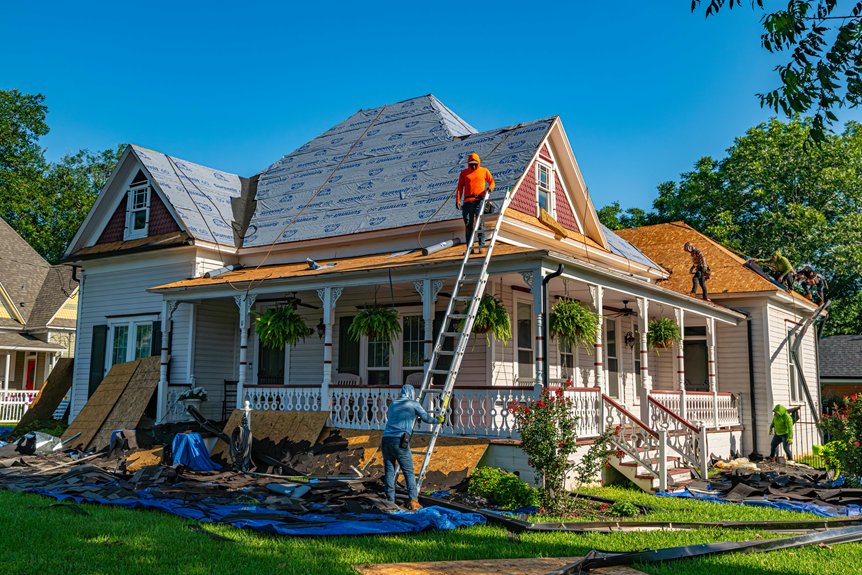
Sometimes, roof replacement becomes the most practical choice when repairs no longer address the underlying issues or when the roof has reached the end of its lifespan.
If your roof has suffered extensive storm damage, fixing individual areas may no longer be effective, especially if multiple sections are compromised.
Additionally, if your roof is outdated and you’re considering aesthetic upgrades to improve your home’s appearance, replacement offers a fresh, cohesive look.
A new roof also provides better protection against future storms and weather events.
When repairs become frequent or insufficient, and your roof no longer meets your needs or safety standards, opting for a full replacement ensures peace of mind and long-term durability.
It’s the best move when repairs no longer make sense financially or practically.
Considering the age and condition of your roof, a trusted roofing expert can help determine whether replacement is the right choice for your home.
Cost Comparison: Repair vs. Replacement
When weighing the costs of roof repair versus replacement, it’s important to understand that repairs typically cost less upfront but may lead to higher expenses over time if issues persist.
Repair costs mainly involve material costs for patches or small sections and labor expenses for fixing specific problems. These costs are usually affordable initially, making repairs appealing for minor issues.
However, if problems recur or worsen, repeated repairs can add up, eventually surpassing the cost of a full roof replacement.
Replacement involves higher upfront material costs for new roofing materials and increased labor expenses due to the extensive work involved. While more expensive initially, a replacement can be more cost-effective long-term, especially if your current roof is aging or severely damaged.
The Impact of Age and Condition of Your Roof
The age and overall condition of your roof play a crucial role in determining whether repair or replacement is the better option. A roof’s age directly impacts its ability to withstand weather and daily wear.
Generally, if your roof is nearing or exceeding 20 years, replacement may be the wiser choice, especially if signs of deterioration are evident. The roof condition, including missing shingles, leaks, or extensive granular loss, also guides your decision.
A roof in poor condition, regardless of age, often requires more repairs than it’s worth, making replacement more cost-effective in the long run. Conversely, a relatively new roof with minor issues might only need repairs.
Evaluating both roof age and condition helps you make an informed decision suited to your needs.
Types of Damage and Their Repairability
Understanding the types of damage your roof sustains is essential for determining whether repairs will suffice or if replacement is necessary.
Storm damage, such as missing shingles, dents, or punctures, often requires immediate attention. If the damage is localized, repairs like patching or shingle replacement can be effective.
However, extensive storm damage that compromises the roof’s integrity may mean replacement is the better choice.
Cosmetic issues, like fading or minor surface stains, usually don’t affect your roof’s functionality and can often be repaired or cleaned without replacing the entire roof.
Recognizing the severity of damage helps you decide between repairs and a full replacement.
Long-Term Benefits of Replacing Your Roof
Replacing your roof offers long-term benefits that can substantially enhance your home’s value and performance. A new roof increases roof longevity, reducing the need for frequent repairs and giving you peace of mind.
It also improves energy efficiency, helping lower your utility bills over time. With a new roof, you’ll have the opportunity to implement maintenance tips that keep it in top shape for years, such as regular inspections and cleaning gutters. This proactive approach prevents minor issues from escalating into costly problems.
Additionally, a new roof boosts curb appeal, which can increase your home’s market value. Overall, investing in a roof replacement provides lasting durability and performance, making it a smart choice for long-term savings and protection.
Common Roofing Materials Used in Tuttle, OK
In Tuttle, OK, homeowners often choose from a variety of roofing materials to suit their needs and budget. Asphalt shingles are popular due to their affordability, durability, and wide range of styles.
Metal roofs are another option, offering longevity and excellent resistance to weather, backed by strong roofing warranties. Tile and slate roofs provide a classic look and long-lasting performance but tend to be more expensive.
Each material requires specific maintenance tips to extend its lifespan, such as regular inspections and cleaning.
Understanding the pros and cons of these options helps you make an informed decision about repair or replacement. By choosing the right material, you can ensure your roof provides reliable protection and maintains its value over time.
How to Assess Your Roof’s Overall Health
To accurately assess your roof’s overall health, start by inspecting both the exterior and interior for signs of damage or wear. Look for missing or damaged shingles, curled edges, or moss growth, which can indicate underlying issues.
Check your roof ventilation; poor ventilation can cause heat and moisture buildup, leading to damage over time.
Inside, examine your attic for water stains, mold, or sagging insulation, which signal leaks.
Don’t forget gutter maintenance—clogged gutters can cause water backup and damage your roof’s edges. Clear debris regularly and ensure gutters are securely attached and flowing properly.
These steps help you identify early warning signs, so you can decide whether repairs are enough or if a roof replacement might be necessary.
Making the Best Decision for Your Home and Budget
Deciding whether to repair or replace your roof depends on balancing your home’s needs with your budget. If storm damage is minor and limited, repairs might suffice, especially if your roofing warranties still cover repairs.
However, extensive damage from storms or age may make replacement more cost-effective in the long run. Consider the roof’s remaining lifespan and whether repairs will provide lasting protection or only delay replacement.
Keep in mind that some warranties require full replacement to maintain coverage, which could influence your decision. If you’re facing ongoing issues or uncertain about the roof’s condition, consulting a professional can help clarify whether repairs will suffice or if a full replacement is the better investment.
Ultimately, your choice should protect your home and fit your financial situation.
Conclusion
Ultimately, choosing between roof repair and replacement depends on your roof’s age, damage, and overall condition. If repairs are minor and recent, they can extend your roof’s life. But if damage is extensive or your roof’s over 20 years old, a replacement might be the better long-term investment. For more information on how to schedule your free roof inspection, call us at (405) 543-2920 or visit us online at Top View Roofing. Consult a professional to assess your roof’s health and make the smartest choice to protect your home and budget effectively.