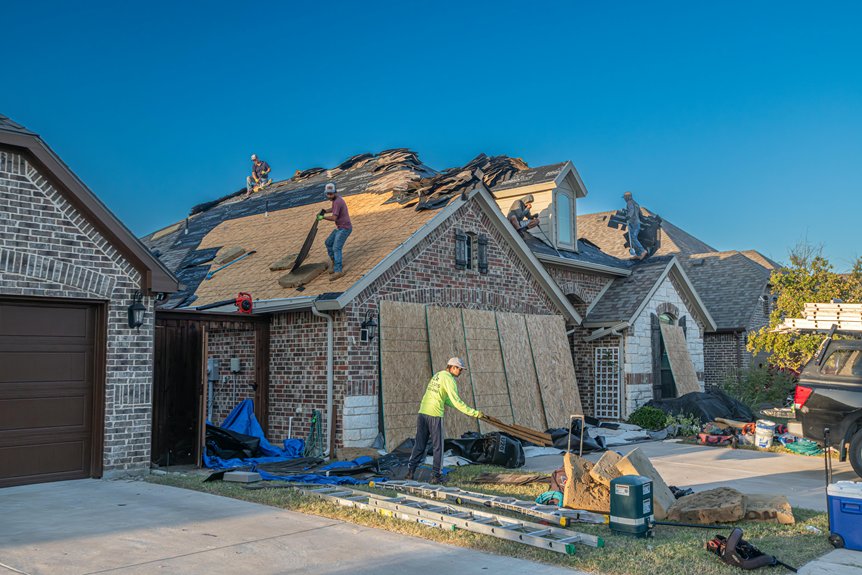
After a hailstorm hits Midwest City, OK, you might notice signs of damage on your roof that could compromise your home’s safety. Acting quickly is essential, but knowing where to start can be confusing. Understanding the full extent of the damage and the best way to address it can make a significant difference in protecting your property long-term. Here’s what you need to take into account to ensure your roof stays strong against future storms.
Recognizing the Signs of Hail Damage on Your Roof
Hail damage to your roof can be subtle at first, but recognizing the signs early can prevent costly repairs later. Pay attention to hail patterns—clusters of dents or cracks often indicate impact zones.
The type of roof material also influences how damage appears; asphalt shingles may show bruising or granule loss, while metal roofs might develop small dents. Look for irregular or circular marks, especially on exposed surfaces.
Missing granules on shingles expose underlying layers, leading to faster deterioration. Metal roofs can sustain dents without losing integrity, but multiple impacts weaken the structure over time.
Regular inspections after a hailstorm help spot these signs before they worsen. Being aware of hail patterns and how your roof material reacts is key to early damage detection. Understanding roofing materials can help homeowners better assess potential damage and plan repairs accordingly.
The Immediate Steps to Take After a Hailstorm
After a hailstorm, your top priority is ensuring your safety before inspecting your roof. Stay indoors and avoid any downed power lines or falling debris. Once you’re safe, focus on hail cleanup around your property—clear fallen branches or loose objects that could cause injury or damage.
Document the storm’s impact with photos for insurance purposes. Review your storm preparedness plans to identify any gaps and guarantee emergency supplies are stocked. It’s also wise to cover any vulnerable areas of your roof with a tarp if you notice leaks or damage, preventing further issues.
How to Assess the Extent of Roof Damage
Once you’ve guaranteed your safety and completed initial cleanup, it’s time to assess the damage to your roof. Start by inspecting for obvious signs like missing shingles, dents, or granule loss. Pay close attention to areas exposed to the most weather patterns, such as ridges and valleys. Trusted roofing experts can provide valuable insight into the extent of damage and recommend the best course of action. Consider the material durability—some materials, like asphalt shingles, may show damage quickly, while metal roofs might reveal dents or cracks. Check inside your attic for leaks or water stains, which can indicate hidden damage. Keep in mind that severe weather patterns, like hailstorms, can cause varying damage levels depending on the material’s resilience. A thorough inspection helps determine whether repairs are enough or if you need a full roof replacement.
Why Prompt Repairs Are Critical for Your Home’s Safety
Prompt repairs are essential because lingering damage can weaken your roof’s structure, increasing the risk of leaks and further deterioration. Ignoring hail damage compromises hail safety, leaving your home vulnerable to water intrusion and mold growth.
The longer you delay repairs, the more stress you place on your roof’s integrity, which can shorten its roof longevity. Timely fixes help prevent minor issues from becoming major problems, saving you money and stress down the line.
Addressing hail damage quickly ensures your home remains safe and protected from future storms. Prioritizing prompt repairs maintains the roof’s strength and resilience, giving you peace of mind knowing your home is secure against the elements.
Don’t wait—act now to safeguard your investment and safety.
Choosing the Right Roofing Contractor in Midwest City
Choosing the right roofing contractor in Midwest City is essential to guarantee your hail-damaged roof gets repaired correctly and efficiently. Start by verifying that the contractor is properly licensed, as this ensures they meet local standards and regulations.
Ask about their experience with storm-related repairs and specific expertise in material selection for hail damage. A reputable contractor will guide you through choosing durable materials that withstand future storms, such as impact-resistant shingles or metal roofing.
Don’t settle for low bids or unverified companies; instead, seek reviews and references. An experienced, licensed contractor will handle your project with professionalism, ensuring quality work and compliance with local codes.
Making an informed choice now saves you time, money, and stress later.
The Roof Replacement Process: What to Expect
Understanding what to expect during a roof replacement can help alleviate any concerns you have about the process. It usually starts with a roof inspection, where your contractor assesses the damage and discusses material options with you.
Once you’ve chosen your materials, the crew will set up safety measures and begin removing the old roof. Expect noise, debris, and some disruption to your daily routine.
The installation process typically takes a few days, depending on the roof’s size and complexity. Throughout, your contractor will keep you informed and answer any questions.
After completion, they’ll conduct a final inspection to ensure quality.
Knowing this process helps you stay prepared and confident as your new roof is installed.
Insurance Claims and Financial Assistance for Storm Damage
After your roof replacement is complete, managing insurance claims and financial assistance becomes the next vital step. Start by reviewing your hail insurance policy to understand coverage details and any deductibles.
Contact your insurance provider promptly to file a claim, providing detailed documentation of storm damage, including photos and repair estimates. Insurance companies often have specific requirements, so staying organized helps streamline the process.
If additional storm assistance is available, such as government aid or local programs, explore these options to help offset costs. Working with a contractor experienced in storm damage claims can also ensure you receive fair compensation.
Preventative Measures to Protect Your Roof From Future Storms
To better protect your roof from future storms, taking proactive preventative measures is essential. Hail prevention begins with regular roof maintenance, such as inspecting for loose or damaged shingles and clearing debris that can trap moisture.
Consider installing impact-resistant roofing materials designed to withstand hail strikes, which can considerably reduce damage during storms. Trimming overhanging branches minimizes the risk of falling limbs that can cause punctures.
Ensure gutters are clean to prevent water backup, which can weaken your roof’s structure. Scheduling professional roof inspections after severe weather can identify vulnerabilities early.
Conclusion
After a hailstorm in Midwest City, don’t wait to address roof damage. Spot signs early, choose a trusted contractor, and act quickly to protect your home. Prompt repairs prevent further issues and ensure your roof stays strong for years to come. Taking these steps now can save you money and stress later. For more information on how to schedule your free roof inspection, call us at (405) 543-2920 or visit us online at Top View Roofing. Stay vigilant, prioritize safety, and keep your home secure with a reliable roof replacement.