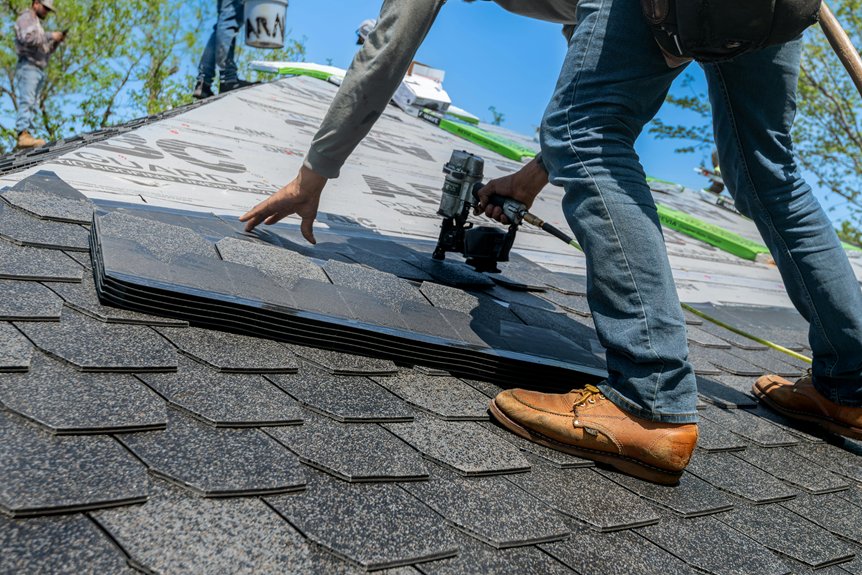
If you’re considering replacing your roof in Midwest City, OK 73110, understanding the costs involved can feel overwhelming. Several factors influence the final price, from material choices to the size of your roof. Knowing what to expect helps you plan better and avoid surprises. To get an accurate idea of your investment, it’s essential to explore the key elements that drive roofing costs in your area. For more information on how to schedule your free roof inspection, call us at (405) 543-2920 or visit us online at Top View Roofing.
What Is the Average Cost to Replace a Roof in Midwest City, OK?
The average cost to replace a roof in Midwest City, OK, typically ranges from $7,000 to $15,000. Your choice of shingle types considerably impacts the price, with options like asphalt shingles being more affordable and premium materials like architectural or designer shingles costing more.
These choices also influence roof warranties, which vary depending on the shingle quality and manufacturer. Longer-lasting, higher-quality shingles often come with extended warranties, providing peace of mind and added value.
When budgeting, consider how your selection affects both upfront costs and long-term protection. While costs can fluctuate based on roof size and complexity, understanding the relationship between shingle types and warranties helps you make informed decisions that balance cost, durability, and coverage.
Factors That Affect Your Roof Replacement Price
Several key factors directly influence the cost of your roof replacement, shaping both the overall price and the quality of the final result. Storm damage can substantially increase costs if your roof needs extensive repairs or replacements due to hail, wind, or heavy rain. The severity and extent of damage will determine the materials and labor required. Additionally, trusted roofing professionals like TopView Roofing can assess damage accurately and recommend appropriate solutions. Roofing warranties also impact your costs; longer or more comprehensive warranties might add to the initial price but offer better protection and peace of mind over time. Additionally, material choices, roof pitch, and accessibility can affect labor and material expenses. Understanding these factors helps you plan for potential costs and ensures you select options that balance quality and budget for your Midwest City home.
How Roof Size Influences Your Total Cost
As your roof size increases, so does the overall cost of replacement, primarily because larger roofs require more materials and longer installation times.
If you’re considering adding solar panels, a bigger roof can substantially raise costs due to the additional mounting and wiring needed.
Similarly, if gutter replacement is necessary during the process, larger roofs mean more extensive gutter work, increasing labor and material expenses.
Keep in mind that a bigger roof might also involve more complex access, which can extend project duration and costs.
Ultimately, the size of your roof directly impacts your total investment, so understanding this relationship helps you budget effectively and plan for any extra features or repairs needed along the way.
Different Roofing Materials and Their Costs
Choosing the right roofing material can substantially affect your overall replacement costs. Shingles are popular due to their affordability and decent durability, with asphalt shingles offering a good balance of cost and lifespan. They typically last 15-30 years, depending on shingle durability, and are easy to install.
Metal roofing, on the other hand, costs more upfront but provides exceptional longevity—often lasting 40-70 years—and withstands harsh weather better. If you’re looking for low maintenance and increased durability, metal roofing can be a wise investment.
Other options like tile or cedar shake come with higher costs but offer unique aesthetics and durability benefits. Your choice depends on your budget, aesthetic preferences, and long-term goals for your home.
Additional Expenses to Budget for During Your Roof Replacement
When planning your roof replacement, it’s important to account for additional expenses beyond the cost of materials and labor. One key cost is permit fees, which vary by city and guarantee your project complies with local building codes. Skipping or underestimating these fees can cause delays or fines.
Another expense to consider is insurance claims. If your roof damage is covered, you’ll need to navigate the claims process, which might involve deductibles or additional paperwork. If your insurance covers part of the replacement, make sure you understand what’s included and what’s your responsibility.
Budgeting for these extras prevents surprises and keeps your project on track. Being aware of permit fees and insurance considerations ensures a smoother, stress-free roof replacement experience. Additionally, understanding regional weather challenges can impact your project timeline and material choices, helping you prepare for potential delays or damage during installation.
Tips to Save Money on Your Roof Replacement
To save money on your roof replacement, start by comparing quotes from multiple contractors to guarantee you’re getting a fair price. This not only helps you find competitive rates but also ensures you’re working with reputable professionals.
Addressing storm damage promptly can prevent more extensive repairs and reduce costs in the long run.
When choosing materials, focus on options that come with strong roof warranties—these protect your investment and can save you money if issues arise later.
Consider scheduling replacements during off-peak seasons when contractors often offer discounts.
Finally, ask about any available discounts or financing plans.
Being informed and proactive helps you avoid unnecessary expenses, making your roof replacement more affordable without sacrificing quality.
Weather Conditions in Midwest City and Their Impact on Roofing Prices
Midwest City’s weather patterns considerably influence roofing costs throughout the year. Storm damage from severe weather can lead to sudden repairs or replacements, increasing overall expenses.
During seasonal fluctuations, such as heavy rains or intense heat, roofing materials may wear faster, requiring more frequent maintenance or early replacement. These weather conditions can also delay projects, causing added labor costs and scheduling challenges.
If you experience a storm, expect higher costs due to urgent repairs needed to prevent further damage. Planning your roof replacement around favorable weather can help you avoid unnecessary expenses.
Being aware of seasonal fluctuations and potential storm damage lets you better prepare your budget and timeline, ensuring your project proceeds smoothly and cost-effectively.
When and Why to Upgrade Your Roofing Materials
Upgrading your roofing materials becomes essential when your current roof shows signs of aging, frequent leaks, or escalating repair costs. Over time, materials can deteriorate, reducing their durability and increasing the risk of damage.
If your roof no longer offers reliable protection, it’s wise to contemplate a replacement with more durable materials that come with comprehensive roofing warranties. Upgrading improves your home’s energy efficiency, adds curb appeal, and provides peace of mind.
Choosing high-quality materials ensures better material durability, which means fewer repairs and longer-lasting protection. When your current roof reaches the end of its lifespan or fails to meet your needs, upgrading is a smart investment to enhance safety, reduce ongoing costs, and secure your home’s value.
How to Get Accurate Roof Replacement Estimates
Getting an accurate roof replacement estimate starts with understanding what factors influence the overall cost. Begin by scheduling a thorough roof inspection, which helps identify existing damage and the extent of work needed. This inspection allows you to provide precise details to contractors, ensuring your estimate reflects reality.
When requesting quotes, ask about warranty options, as they can impact long-term costs and peace of mind. Comparing detailed estimates from multiple local contractors helps you spot discrepancies and understand what’s included, such as materials and labor.
Be clear about your preferred roofing materials and any specific requirements. Accurate estimates depend on transparency, so don’t hesitate to ask questions and verify what each quote covers to make an informed decision.
Choosing a Local Roofing Contractor for the Best Price and Service
Choosing a local roofing contractor can substantially impact both the price you pay and the quality of service you receive. Local experts often offer better insights into roof maintenance needs specific to Midwest City’s climate, helping you save money long-term.
When selecting a contractor, ask about their roof warranties to ensure you’re protected against future issues. A reputable local roofer will provide clear estimates, quality materials, and reliable service, ensuring your roof is well-maintained and durable.
They also understand local building codes and permit requirements, which can prevent costly delays. Prioritizing a contractor with good reviews and proven experience in roof replacement guarantees you get the best price and service, giving you peace of mind for years to come.
Conclusion
Getting your roof replaced in Midwest City, OK, doesn’t have to be overwhelming. By understanding the factors that influence costs and comparing estimates from local contractors, you can find a solution that fits your budget and needs. Remember to take into account material choices, weather impacts, and additional expenses. Taking the time to research and choose a reputable contractor ensures your roof gets the quality work it deserves, giving you peace of mind for years to come. For more information on how to schedule your free roof inspection, call us at (405) 543-2920 or visit us online at Top View Roofing.