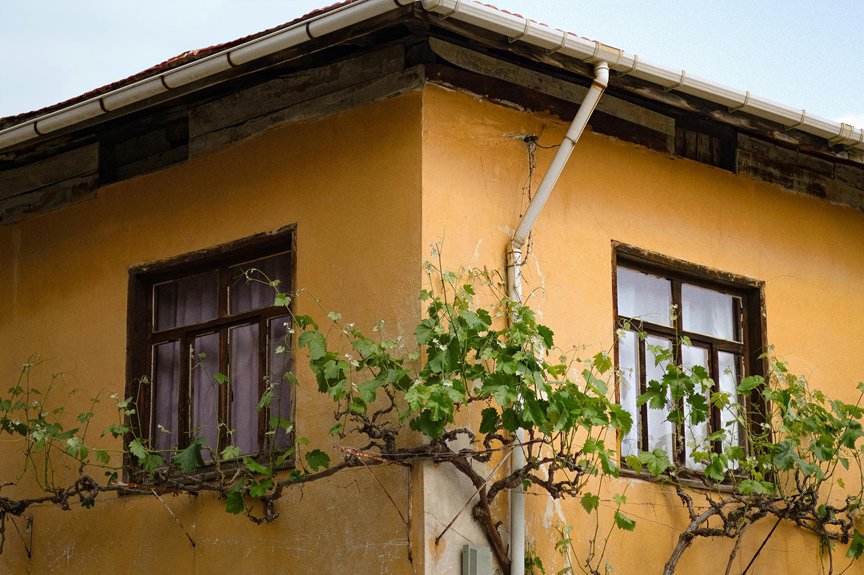
When planning a roof replacement, deciding whether to replace your gutters at the same time can greatly impact your home’s water management and long-term costs. While doing both projects together offers benefits like improved efficiency and potential savings, it also requires careful consideration of your current gutter condition and overall budget. Understanding the relationship between your roof and gutters can help you make the most informed choice for your home’s durability and value.
Understanding the Relationship Between Roofs and Gutters
Roofs and gutters work together to protect your home from water damage. Proper gutter maintenance is essential for guaranteeing water flows away from your roof and foundation effectively.
When gutters are clogged or damaged, water can overflow, leading to roof deterioration and a shortened roof lifespan. Conversely, a well-maintained gutter system directs rainwater smoothly, reducing the risk of leaks and structural issues.
Regular inspections and cleaning help prevent debris buildup that hampers gutter function. By maintaining gutters, you support your roof’s integrity and extend its lifespan.
Understanding this relationship emphasizes the importance of timely gutter maintenance as part of your overall roof care strategy. Keeping both systems in ideal condition safeguards your investment and guarantees long-term home protection.
For professional help with roof and gutter concerns, consider scheduling a free inspection to assess and address potential issues promptly.
Advantages of Replacing Both Simultaneously
Replacing both your roof and gutters at the same time offers significant cost savings and minimizes disruptions to your home maintenance schedule.
When you coordinate these projects, you reduce labor costs and avoid repeated contractor visits, leading to overall savings. Additionally, installing new gutters alongside your roof enhances the system’s efficiency, guaranteeing better water drainage and protecting your home’s foundation.
This combined approach streamlines repairs and upgrades, preventing the need for future partial replacements that could be more costly over time. Replacing both components simultaneously guarantees compatibility, boosting the overall performance of your roofing system.
Ultimately, this integrated upgrade provides improved efficiency in water management and long-term durability, making it a strategic choice for homeowners seeking value and reliability.
Factors to Consider Before Doing Both Projects
Before proceeding with both projects simultaneously, it’s important to evaluate several key factors to secure a smooth and cost-effective upgrade.
First, consider your roofing materials; some materials, like asphalt shingles, may require specific gutter styles for ideal drainage. If your roof uses metal or tile, make sure your gutters can accommodate the weight and design.
Next, assess the condition of your existing gutters—if they’re outdated or damaged, replacing both makes sense. Compatibility between roofing materials and gutter styles is essential to prevent leaks or drainage issues.
Also, think about your home’s architecture and whether simultaneous replacements will enhance curb appeal or functionality.
Addressing these factors helps guarantee your investment improves durability, efficiency, and overall home value.
Cost Implications of Combined Replacement Versus Separate Work
Choosing to replace your roof and gutters simultaneously can greatly impact your overall costs, often leading to savings through combined project management and bulk purchasing.
A thorough cost comparison shows that doing both jobs together typically results in lower labor and material expenses compared to scheduling them separately. This approach streamlines the process, reducing the need for multiple mobilizations and minimizing disruptions.
When budget planning, consider that combined work can also help avoid potential future costs associated with mismatched aging or damage. While the initial investment might be higher, the long-term savings and convenience often outweigh separate replacements.
Carefully evaluate quotes from contractors to understand the true cost implications and determine if this integrated approach aligns with your financial goals.
Signs That Indicate You Need New Gutters Alongside Your Roof
Cracks, sagging, or overflowing gutters are clear signs that your current system no longer provides effective protection.
Gutter damage can lead to water seepage into your home’s foundation or walls, increasing the risk of roof leaks. If you notice water spilling over during storms or pooling around the foundation, it indicates your gutters aren’t functioning properly.
Rust, holes, or detached sections are also signs of deterioration that warrant replacement. When gutters fail, water can back up and seep beneath your roofing materials, causing leaks and structural damage.
Addressing gutter issues promptly helps prevent further roof deterioration. If these signs are present, it’s time to think about installing new gutters alongside your roof replacement to guarantee thorough protection.
Timing and Scheduling for Roof and Gutter Installations
Scheduling your roof and gutter replacements requires careful planning to minimize disruption and guarantee ideal outcomes.
You should consider installation timelines, which can vary based on the scope of work and weather conditions. Seasonal considerations are vital; for example, spring and early summer often offer favorable weather for roofing projects, while winter may cause delays due to snow or cold temperatures.
Coordinating both installations simultaneously can reduce overall project time and prevent repeated disruptions. Consult with your contractor to establish a realistic schedule that aligns with seasonal patterns and your availability.
Proper planning guarantees materials arrive on time and that weather won’t compromise the quality of the work. Ultimately, a well-timed schedule results in a smoother process and a durable, long-lasting upgrade.
Making the Best Decision for Your Home and Budget
Making the best decision for your home and budget involves carefully weighing your priorities and financial constraints.
Start with a clear assessment of your home maintenance needs, considering whether your roof or gutters are more urgent. Budget planning is essential to allocate funds effectively, ensuring you don’t overspend while still addressing critical issues.
If your roof is severely damaged, replacing it may be a priority, with gutters addressed later if budget constraints exist. Conversely, if gutters are causing water damage or foundation issues, prioritizing gutter replacement can prevent costly repairs down the line.
Consider long-term savings and energy efficiency. Consulting with professionals can help you determine the most cost-effective approach, balancing immediate needs with your financial capacity and ensuring your home remains protected.
Conclusion
Replacing your roof and gutters together can save you money, improve water management, and prevent future damage. Assess your gutters’ condition and consider how they’ll work with your new roof for maximum durability. Timing is key—schedule both projects thoughtfully to avoid unnecessary costs. Ultimately, doing both guarantees your home stays protected, functional, and valuable for years to come. Making an informed choice benefits your budget and peace of mind. For more information on how to schedule your free roof inspection, call us at (405) 543-2920 or visit us online at Top View Roofing.