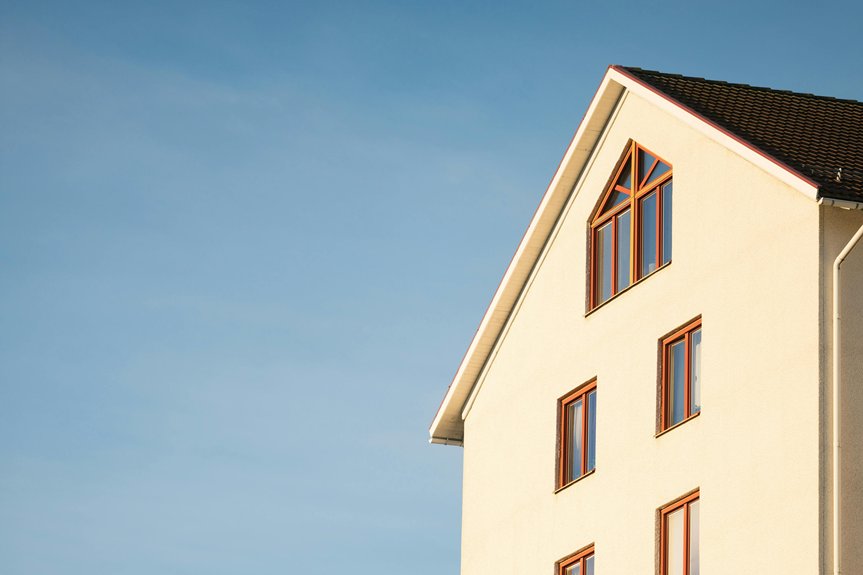
As a Mustang, OK property owner, understanding your roof’s key components is vital. Your roof includes framing elements like rafters, sheathing, underlayment, and protective roofing materials such as shingles or metal panels. Selecting weather-resistant, impact-rated materials suited for Oklahoma’s storms and temperature swings enhances durability. Proper installation, maintenance, and design, like steeper slopes or specific shapes, influence longevity and resilience. Exploring these details further helps guarantee your roof stands strong against the elements and lasts longer.
Understanding the Basic Components of a Roof in Mustang, OK
Understanding the basic components of a roof in Mustang, OK, requires familiarity with its core structural elements. The roof framing forms the backbone, supporting the entire structure and maintaining stability. Typically, roof framing includes rafters, which slope from the ridge to the eaves, and beams that distribute weight evenly. Proper framing ensures load transfer and resistance to local weather conditions. Adjacent to framing, attic insulation plays a critical role in energy efficiency and moisture control. It’s installed between the rafters or on the attic floor, preventing heat transfer and reducing energy costs. The insulation’s R-value determines its effectiveness, so selecting the right type and thickness is essential for Oklahoma’s climate. Additionally, understanding local weather challenges helps in choosing appropriate roofing materials and designs. Understanding these components helps you appreciate how the roof’s structural integrity and thermal performance are maintained. Accurate installation and maintenance of roof framing and attic insulation are crucial for durability, energy efficiency, and overall building safety.
How to Choose the Right Roofing Materials for Oklahoma Weather?
Choosing the right roofing materials for Oklahoma weather requires evaluating climate resilience factors such as wind resistance and thermal performance. You should compare material durability options like asphalt shingles, metal, and tile, considering their ability to withstand severe storms and temperature fluctuations. Balancing upfront costs with long-term longevity ensures your roof provides ideal protection while fitting your budget. Additionally, selecting materials that meet local building codes and standards can enhance your roof’s storm-damage resistance, ensuring lasting performance in Oklahoma’s dynamic climate.
Climate Resilience Factors
Oklahoma’s variable climate, characterized by hot summers, severe thunderstorms, and occasional winter storms, demands roofing materials that can endure these diverse weather conditions. To guarantee storm preparedness, select materials with high impact resistance and strong wind uplift ratings, minimizing damage during severe weather.
Additionally, prioritize energy efficiency by choosing reflective or cool roofing options that reduce heat transfer, lowering cooling costs during summer. Proper insulation enhances thermal performance, further boosting resilience against temperature fluctuations.
Consider materials with proven durability in extreme conditions, such as metal or high-quality asphalt shingles, which maintain integrity under storm stress. Combining impact resistance with energy-efficient features creates a roof capable of withstanding Oklahoma’s climate while optimizing long-term performance and cost savings.
Material Durability Options
What factors should you consider when selecting roofing materials to guarantee durability against Oklahoma’s extreme weather conditions? Focus on shingle selection by evaluating impact resistance, wind uplift ratings, and thermal performance.
Asphalt shingles with Class 4 impact ratings offer resilience against hail, while architectural shingles provide added durability.
Metal roofing is an excellent alternative, offering high resistance to high winds and temperature fluctuations.
When choosing between materials, assess their ability to withstand temperature swings, UV exposure, and severe storms common in Mustang.
Proper material selection hinges on understanding these performance characteristics to ensure longevity and minimal maintenance.
Both shingle options and metal roofing can deliver durability if properly specified, but your choice should align with your property’s specific exposure risks and long-term resilience goals.
Cost and Longevity Balance
Balancing initial costs with long-term durability is essential when selecting roofing materials suited for Oklahoma’s extreme weather conditions. Materials like asphalt shingles offer low upfront costs but may require more frequent roof maintenance and have shorter roofing warranties, impacting overall longevity.
Metal roofs, though more expensive initially, provide superior resistance to hail, high winds, and temperature fluctuations, reducing maintenance needs and extending lifespan. When evaluating options, consider the roofing warranty coverage—longer warranties typically indicate higher-quality materials that withstand Oklahoma’s climate challenges.
A detailed cost analysis should include potential repair costs and the durability of each material. By appraising the trade-offs between upfront investment and expected longevity, you ensure your roof’s performance aligns with your budget and climate resilience requirements.
The Step-by-Step Process of Roof Construction and Installation
The process of roof construction and installation involves a series of meticulously coordinated steps to guarantee structural integrity and durability. Initially, you’ll install the roof framing, which provides the primary support structure. Precise measurements and strong materials are essential to ensure the framing can withstand environmental stresses.
Next, you lay down the waterproof membranes, which serve as a critical barrier against water intrusion. These membranes are carefully overlapped and sealed to prevent leaks, especially around penetrations like vents and chimneys.
Once the waterproof layer is secured, you proceed with installing the underlayment, followed by the roof covering itself, such as shingles or metal panels. Each step requires attention to detail, ensuring proper fastening and alignment.
Throughout, you verify the integrity of each layer, maintaining the correct slope and drainage. This systematic process results in a durable, weather-resistant roof that protects your property for years to come.
Key Structural Elements That Ensure Your Roof’s Durability
Your roof’s durability hinges on the load-bearing framework’s structural integrity, which must withstand both static and dynamic forces.
Proper ventilation systems are essential to prevent moisture buildup and temperature fluctuations that can jeopardize materials.
Additionally, selecting weather-resistant materials ensures long-term resilience against environmental elements.
Load-Bearing Framework Integrity
Because the load-bearing framework forms the core structural support of your roof, its integrity is crucial to ensuring long-term durability and safety. The load bearing framework comprises load-bearing walls, rafters, trusses, and beams that transfer roof loads to the building’s foundation.
Properly designed and installed structural support elements prevent sagging, shifting, or collapse under weight from snow, wind, or maintenance activities. Regular inspections should focus on identifying signs of stress, such as cracks or warping, which compromise the framework’s strength.
High-quality materials, like engineered wood or steel, enhance load distribution and resistance to environmental factors. Ensuring the load-bearing framework’s integrity is essential for maintaining your roof’s stability, preventing costly repairs, and safeguarding your property’s structural soundness over time.
Proper Roof Ventilation Systems
Proper roof ventilation systems serve as critical structural elements that maintain the longevity and stability of your roof. Effective attic ventilation ensures consistent airflow, preventing heat buildup and moisture accumulation that can weaken roofing materials and promote mold growth.
You should incorporate adequate intake vents at the soffits and exhaust vents, such as roof ridge vents, to establish a continuous airflow cycle. Roof ridge vents are installed along the peak of the roof, allowing warm, moist air to escape efficiently.
Proper placement and sizing of these vents are essential for peak performance, avoiding issues like ice dams or condensation. This balanced ventilation system maintains a stable attic environment, prolongs roof lifespan, and reduces energy costs by improving insulation efficiency.
Weather-Resistant Materials Use
Selecting weather-resistant materials is essential for guaranteeing your roof’s durability against the elements. High-quality roof insulation plays a critical role by providing thermal barriers that prevent moisture infiltration and reduce temperature fluctuations, thereby minimizing material stress.
Durable membrane materials, such as asphalt shingles or metal panels, resist UV degradation, wind uplift, and hail damage. Properly installed gutter systems are vital for directing water runoff away from the roof structure, preventing water pooling and potential leaks.
Incorporate corrosion-resistant flashing and sealants around vents and joints to reinforce the roof’s integrity. Using these weather-resistant elements ensures your roof withstands harsh weather conditions, preserves structural stability, and extends its lifespan.
Regular inspections and maintenance further optimize their performance over time.
Common Roof Designs and How They Impact Longevity and Maintenance
Different roof designs considerably influence both the longevity and maintenance requirements of a structure. The variety of roof shapes, such as gable, hip, and flat, each impacts how well the roof withstands environmental stressors and how often repairs are needed.
Roof angles are equally critical; steeper angles facilitate better water runoff, reducing the likelihood of leaks and water damage. Conversely, flatter roofs tend to require more frequent inspections and maintenance due to pooling issues.
Gable roofs, with their pronounced pitch, typically offer increased durability and easier access for repairs. However, they may be more vulnerable to wind damage if not properly reinforced.
Hip roofs provide enhanced stability against strong winds and snow loads but involve more complex construction, which can influence long-term maintenance costs.
Understanding how different roof shapes and roof angles interact with local climate conditions helps you select a design optimized for durability, minimizing ongoing maintenance needs.
Signs You Need Repairs or a New Roof and What to Expect During Replacement
Identifying when your roof requires repairs or a new roof is essential to prevent structural damage and avoid costly fixes. Regular roof maintenance and thorough roof inspections help detect early signs of deterioration, such as curling or missing shingles, granular loss, or visible leaks.
Pay attention to water stains on ceilings or walls, as these indicate compromised roof integrity. Damaged flashing or deteriorated sealants around vents and chimneys also suggest urgent repair needs.
During a professional roof inspection, specialists assess the condition of decking, flashing, and ventilation systems to determine if repairs suffice or if replacement is necessary. If your roof shows widespread shingle damage, extensive leaks, or structural sagging, replacement is often the most cost-effective solution.
During replacement, expect an all-encompassing process involving removal of the old roofing material, inspection of underlying structures, and installation of new roofing components with attention to proper ventilation and waterproofing.
Conclusion
Understanding your roof’s components, materials, and construction process enables you to make informed decisions and guarantee long-term durability. Regular inspections for signs of damage help you address issues early, avoiding costly repairs. By choosing the right design and materials suited for Oklahoma’s climate, you enhance your roof’s lifespan. Staying proactive with maintenance and understanding replacement procedures empower you to protect your property efficiently and effectively. For more information on how to schedule your free roof inspection, call us at (405) 543-2920 or visit us online at Top View Roofing.