To neutralize rust on your metal roof in Mustang OK, first inspect for signs like stains, discoloration, or peeling paint. Use a wire brush or power tool to remove loose rust and debris, then apply a rust converter or inhibitor to chemically stabilize remaining corrosion. Once dry, coat with a rust-inhibiting primer and a weather-resistant protective coating. Proper preparation and application are essential, and exploring these steps further can help guarantee a durable, rust-free surface.
Understanding Rust Damage on Metal Roofs in Mustang OK
Rust damage on metal roofs in Mustang, OK, often results from prolonged exposure to high humidity, frequent rainfall, and the area’s specific atmospheric conditions. These environmental factors accelerate oxidation, leading to surface corrosion that compromises the roof’s integrity.
To guarantee effective rust prevention, it’s crucial to understand how moisture interacts with metal surfaces, promoting rust formation. Proper metal preservation techniques include applying protective coatings, such as primers and paints formulated for corrosion resistance, which create a barrier against moisture and oxygen.
Regular inspections can identify vulnerable areas where protective layers may have deteriorated. Using corrosion-resistant metal alloys during installation also enhances durability.
Signs and Indicators That Your Metal Roof Is Rusting
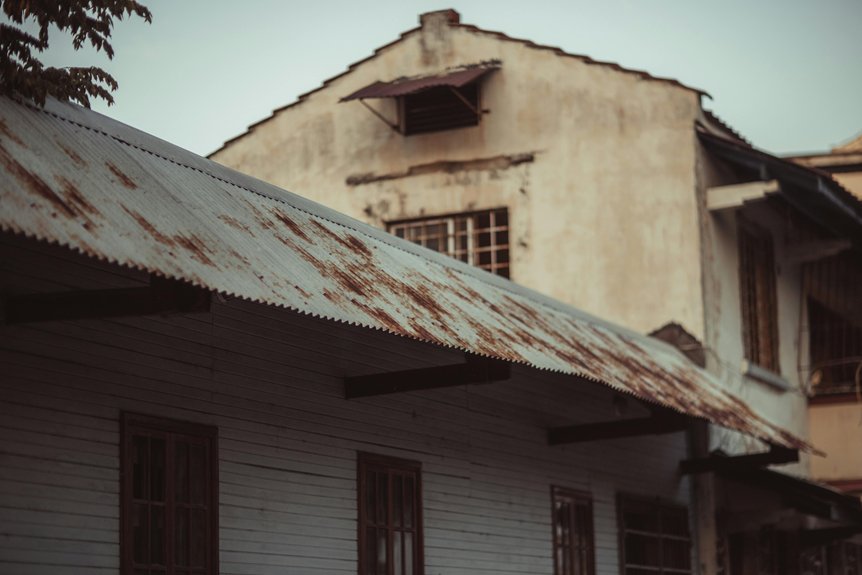
You should regularly inspect your metal roof for visible rust stains, which often appear as reddish-brown marks on the surface. Look for surface discoloration signs, such as uneven patches or fading finish, indicating underlying corrosion. Additionally, flaking or peeling paint serves as a clear indicator that rust has compromised the protective coating and may be spreading beneath. Regular maintenance and protective coatings can help prevent rust formation and extend the lifespan of your metal roof.
Visible Rust Stains
Visible rust stains on a metal roof often serve as the earliest and most apparent signs of corrosion. These staining patterns typically appear as reddish-brown streaks or patches along seams, fasteners, or areas exposed to moisture accumulation. Recognizing these stains early is vital for effective rust prevention. Understanding roofing materials can help homeowners select the best options for rust resistance. They indicate that oxidation has penetrated the protective coating, risking further deterioration. To address this, inspecting the affected areas and removing loose rust with a wire brush is essential. Applying a high-quality metal paint formulated for rust resistance creates a barrier against moisture ingress. Prompt treatment prevents rust from progressing deeper into the metal substrate, extending the roof’s lifespan. Regular maintenance and early intervention are key to preserving your roof’s integrity and ensuring long-term durability.
Surface Discoloration Signs
Surface discoloration on a metal roof often signals underlying corrosion processes. You may notice paint bubbling, which indicates moisture infiltration beneath the coating, a precursor to rust formation.
Additionally, color fading—particularly dulling or uneven pigmentation—can reveal oxidation of the metal surface. These visual cues result from chemical changes as rust progresses, weakening protective layers.
Pay close attention to areas where the paint appears swollen or distorted, as these are signs of active corrosion beneath the surface. Discoloration patterns, such as streaks or blotches, often align with moisture pathways, accelerating deterioration.
Recognizing these signs early enables timely intervention, preventing extensive rusting and prolonging your roof’s lifespan. Regular inspection of surface discoloration provides vital insight into your roof’s structural integrity.
Flaking or Peeling Paint
When paint begins to flake or peel from a metal roof, it signals that underlying corrosion has compromised the protective coating, often due to rust formation beneath the surface. This paint peeling occurs as rust spots develop underneath, causing the coating to lose adhesion and lift away.
You may notice sections where the paint is bubbling, cracking, or visibly lifting, exposing bare metal. Rust infiltration weakens the metal’s integrity, accelerating deterioration.
Peeling paint not only indicates active corrosion but also allows moisture to penetrate, exacerbating rust growth. Prompt detection of these signs enables targeted rust removal and coating restoration, preventing further structural damage.
Regular inspections for paint peeling and rust spots are essential to maintain the roof’s longevity and prevent costly repairs.
Why Rust Neutralization Is Critical for Roof Longevity
Neutralizing rust on your metal roof is essential to prevent corrosion from compromising structural integrity. By addressing rust early, you inhibit material degradation that can lead to costly repairs or replacement.
Implementing rust neutralization techniques effectively extends the roof’s functional lifespan, safeguarding your investment.
Prevents Structural Damage
Rust formation on metal roofs accelerates the deterioration of structural components, compromising the overall integrity of the building. Without proper treatment, rust can penetrate through protective layers, weakening framing and support beams.
Applying rust resistant paints and corrosion inhibitors creates a barrier that halts rust progression and preserves metal strength. These specialized coatings chemically neutralize existing rust and prevent new oxidation, reducing the risk of structural failure.
Consistent use of corrosion inhibitors ensures that moisture and oxygen don’t reach vulnerable areas, thereby maintaining the roof’s load-bearing capacity. Neglecting rust neutralization allows corrosion to advance unnoticed, ultimately leading to costly repairs or replacements.
Effective rust prevention preserves the stability of underlying structural elements, ensuring your roof remains safe and functional over time.
Extends Roof Lifespan
Proper rust neutralization markedly prolongs the functional lifespan of your metal roof by preventing ongoing corrosion that weakens material integrity. Effective rust prevention involves applying specialized metal coatings designed to inhibit moisture penetration and block oxygen access, which are essential for rust formation. These coatings create a durable barrier that halts rust progression and shields the underlying metal from environmental elements.
Regular maintenance, including rust neutralization treatments, ensures the coating remains intact and effective over time. By addressing rust early, you reduce the risk of costly repairs or premature roof replacement.
Ultimately, implementing proper rust prevention through targeted metal coatings greatly extends your roof’s longevity, preserving its structural strength and maintaining its protective function for years to come.
Preparing Your Metal Roof for Rust Treatment
Before applying any rust treatment, it’s essential to thoroughly prepare your metal roof to guarantee effective results. Begin by inspecting the surface for loose paint, debris, and existing rust spots. Use rust removal tools such as wire brushes, scrapers, or abrasive pads to remove loose rust and flaking paint, ensuring a clean, stable surface.
Proper cleaning is critical; wash the roof with a high-pressure hose or power washer to eliminate dirt, algae, and grease that can interfere with adhesion. Once cleaned, dry the surface thoroughly to prevent moisture from trapping beneath coatings.
When selecting metal roof coatings, confirm they’re compatible with your roof’s material and suitable for rust treatment. Proper preparation enhances the effectiveness of rust inhibitors and protective coatings, reducing future corrosion.
This meticulous process ensures a solid foundation for subsequent rust removal and sealing, extending the lifespan of your roof and maintaining its structural integrity.
Best Methods to Remove Rust From Metal Roofs
To effectively remove rust from a metal roof, selecting the appropriate method depends on the extent and severity of corrosion. Begin with rust removal tools tailored to your project’s scope, such as wire brushes, abrasive pads, or power tools like angle grinders equipped with wire wheels or sanding discs.
For light rust, manual scrapers and chemical rust removers can suffice. However, for heavy corrosion, aggressive abrasive techniques ensure thorough metal surface prep. Use chemical rust converters cautiously to stabilize remaining rust before mechanical removal.
When employing power tools, maintain consistent pressure to prevent uneven surfaces. Always wear proper safety gear, including gloves and eye protection.
After rust removal, perform a detailed inspection to ensure all corrosion is eliminated, as incomplete removal can compromise subsequent protective coatings. Proper metal surface prep through precise rust removal ensures optimal adhesion for primers and paints, ultimately extending your roof’s lifespan.
Applying Rust-Inhibiting Primer and Protective Coatings
Once the rust has been thoroughly removed and the surface has been properly prepared, applying a rust-inhibiting primer is essential to prevent future corrosion. Choose a high-quality, corrosion-resistant primer specifically formulated for metal roofs, ensuring it penetrates and bonds effectively to the substrate.
Proper application technique, including even coverage and appropriate drying time, maximizes rust prevention. After the primer cures, apply a durable protective coating designed for metal surfaces; this coating should offer excellent adhesion, weather resistance, and UV protection to enhance coating durability.
Multiple coats may be necessary for ideal coverage and longevity. Use tools like brushes, rollers, or sprayers to achieve a uniform finish. This layered approach creates a barrier that shields the metal from moisture and environmental factors, greatly extending the lifespan of your roof.
Consistent application of these protective layers is critical in maintaining the integrity and rust-free condition of your metal roofing system.
Preventative Maintenance to Stop Future Rust Buildup
Implementing regular preventative maintenance is crucial for inhibiting future rust formation on metal roofs. Consistent inspections allow you to identify early signs of corrosion, such as discoloration or surface pitting, enabling prompt rust prevention measures.
Cleaning the roof with a non-abrasive, pH-balanced solution removes dirt, salts, and debris that can accelerate corrosion. Applying a high-quality, rust-inhibiting primer followed by protective coatings creates a barrier that effectively controls moisture contact, reducing oxidation risks.
Ensure that seams, fasteners, and flashings are sealed properly to prevent water ingress, as these areas are vulnerable to rust development. Regularly checking for standing water or organic buildup helps maintain ideal drainage and airflow, further supporting corrosion control.
When to Call a Professional for Rust Repair in Mustang OK
Knowing when to call a professional for rust repair on your metal roof in Mustang, OK, is critical to preventing further damage and ensuring long-term durability. You should consider expert intervention if surface rust has advanced beyond superficial spots or if corrosion has compromised structural integrity.
A professional can accurately assess whether a specialized rust remover is needed to halt progression, especially in areas where rust has penetrated deep into the metal. Attempting DIY solutions with generic rust removers may not effectively stop corrosion, risking further deterioration.
Skilled technicians also implement proper corrosion prevention techniques, such as applying protective coatings or sealants after rust removal, to extend the roof’s lifespan. If you notice bubbling paint, perforation, or rust spreading rapidly, it’s time to seek expert assistance.
Prompt professional intervention guarantees thorough rust neutralization, preserves the metal roof’s integrity, and prevents costly repairs down the line.
Cost Considerations and DIY vs. Professional Rust Neutralization
While DIY rust neutralization may seem cost-effective initially, understanding the true expenses involved is essential for making informed decisions. Purchasing rust removal tools such as wire brushes, abrasive pads, and chemical rust converters can add up quickly, especially if multiple applications are needed.
Additionally, investing in personal protective equipment (PPE) like gloves, goggles, and respirators is crucial for DIY safety. Improper handling of chemicals or rust removal tools can lead to health hazards.
Professional rust neutralization services, although more expensive upfront, often include the cost of specialized equipment, surface preparation, and expert application techniques. This ensures thorough treatment.
The choice between DIY and professional services ultimately hinges on your budget, your ability to safely manage rust removal tools, and your desired longevity of the repair. Carefully weigh the upfront costs against potential long-term savings from more durable, professionally applied solutions.
Conclusion
By promptly identifying rust signs and applying proper removal and protective treatments, you can substantially extend your metal roof’s lifespan. Regular maintenance, including rust-inhibiting primers and coatings, is essential to prevent future corrosion. If rust damage is extensive or hard to access, consulting a professional ensures thorough repair and long-term protection. Staying proactive with these technical strategies will help maintain your roof’s integrity and save you money over time. For more information on how to schedule your free roof inspection, call us at (405) 543-2920 or visit us online at Top View Roofing.