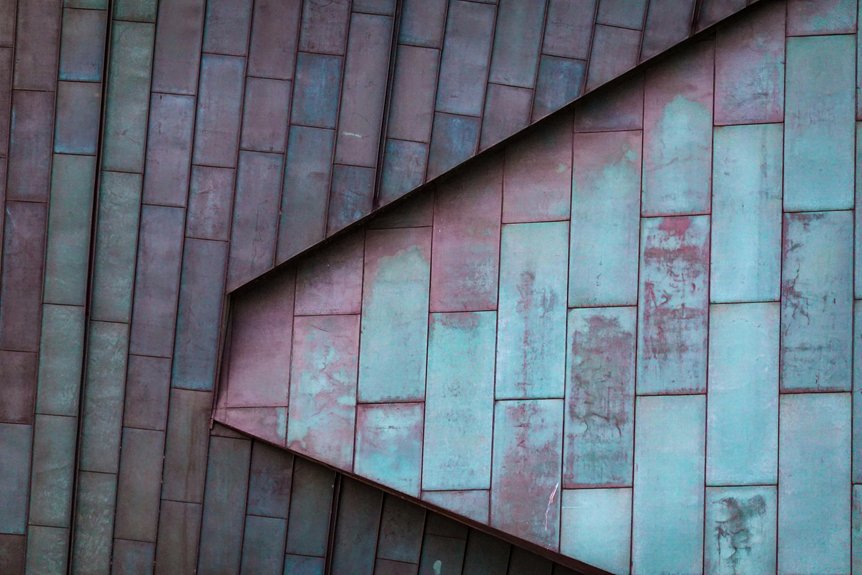
To remove oxidation from your flat or pitched metal roof in OKC, you’ll need to thoroughly clean the surface, removing loose rust with wire brushes or abrasive pads. Applying rust converters or phosphoric acid cleaners counteracts corrosion, followed by priming and applying protective coatings suitable for metal. Regular inspections and professional treatment help ensure long-term protection. For detailed procedures and expert insights, continue exploring how proper maintenance can extend your roof’s lifespan.
Understanding Metal Roof Oxidation and Its Causes in OKC
Understanding metal roof oxidation in OKC requires recognizing that exposure to environmental factors accelerates the corrosion process. The corrosion process begins when moisture, oxygen, and pollutants interact with the metal surface, leading to oxidation. Our team emphasizes the importance of using high-quality, durable materials like black metal roofs to resist these effects. In OKC, environmental factors such as high humidity, frequent rain, and temperature fluctuations contribute notably to this progression. Salt and airborne pollutants from industrial activity can further intensify corrosion, especially in areas with poor drainage or inadequate protective coatings. The breakdown of protective paint or sealants exposes raw metal, increasing vulnerability to oxidation. Over time, these factors create a cycle where moisture and contaminants continuously attack the metal, resulting in rust formation and structural weakening. Understanding how environmental factors influence the corrosion process helps you better anticipate damage and implement effective maintenance strategies to extend your roof’s lifespan. Recognizing these causes is essential for timely intervention and preservation of your metal roofing system.
Signs Your Flat or Pitched Metal Roof Is Oxidizing
Recognizing the early signs of oxidation on your metal roof is essential for preventing extensive damage. Metal discoloration is often the first visible indicator, appearing as dull, uneven patches that may shift from shiny to matte over time. This discoloration results from the breakdown of protective coatings and the formation of oxidation layers on the metal surface.
Additionally, paint deterioration is a critical sign; you may notice peeling, cracking, or flaking paint that exposes raw metal underneath. These issues compromise the roof’s protective barrier, accelerating oxidation. Pay close attention to areas where the paint has failed or where discoloration appears irregular or streaked.
The presence of rust-colored stains or powdery residue further suggests ongoing oxidation. Early detection of these signs allows for timely intervention, minimizing structural risks and preserving your roof’s integrity. Regular inspections focusing on discoloration patterns and paint condition are crucial for maintaining a long-lasting, oxidation-free roof. Monitoring metal surface conditions regularly can help identify oxidation early before it causes significant damage.
Best Methods for Removing Oxidation From Flat Metal Roofs
To effectively remove oxidation from flat metal roofs, you should start by selecting appropriate cleaning methods that target rust and corrosion without damaging the protective coating.
Begin with thorough surface preparation, using a wire brush or abrasive pad to eliminate loose rust and debris.
For chemical rust removal, apply a commercial rust converter or a phosphoric acid-based cleaner, following manufacturer instructions carefully to prevent surface damage.
Once the rust is neutralized, rinse the surface with water and allow it to dry completely.
To restore the roof’s appearance and prevent further oxidation, consider applying a high-quality metal paint formulated for metal roofs, which acts as a protective barrier.
For areas with stubborn rust, sanding or light abrasive blasting may be necessary before repainting.
This process guarantees the removal of oxidation while preserving the integrity of the original metal surface, extending the lifespan of your roof.
Effective Techniques for Restoring Pitched Metal Roofs
To effectively restore your pitched metal roof, start with thorough surface preparation by removing loose rust, debris, and old coatings to guarantee proper adhesion.
Next, apply a high-quality primer designed for metal surfaces to improve corrosion resistance.
Finally, seal the surface with a durable protective coating, such as a polyurethane or silicone-based paint, to prevent future oxidation and extend the roof’s lifespan.
Surface Preparation Techniques
Effective surface preparation is essential for successful oxidation removal on pitched metal roofs, as it guarantees contaminants are thoroughly eliminated and the substrate is properly primed for cleaning or coating.
Begin with targeted cleaning techniques, such as high-pressure washing with appropriate detergents, to remove loose rust, dirt, and oxidation residues.
Ascertain the surface is dry and free of debris before proceeding.
Applying surface primers after cleaning enhances adhesion and provides a uniform base for subsequent coatings.
Select primers formulated for metal and oxidation-prone environments, and apply them evenly using brushes or rollers.
Proper preparation minimizes the risk of future corrosion, improves coating longevity, and guarantees the effectiveness of oxidation removal efforts.
Precision in cleaning and priming sets the foundation for a durable, restored pitched metal roof.
Protective Coating Application
After completing surface preparation, the focus shifts to applying a high-quality protective coating that guarantees long-term corrosion resistance and enhances the roof’s durability. Use a primer specifically formulated for metal surfaces to improve adhesion and rust prevention.
Select a coating with proven durability in harsh weather conditions, ensuring it resists cracking, peeling, and UV damage. Apply the coating in thin, even layers using a sprayer or brush, following manufacturer specifications for thickness and curing times.
Proper application technique minimizes voids and ensures consistent coverage, which is vital for maximizing rust prevention. Regularly inspect the coating post-application for signs of wear or damage.
This meticulous process markedly extends the lifespan of your metal roof by preventing oxidation and maintaining ideal coating durability over time.
Preventive Tips to Protect Your Metal Roof From Future Oxidation
Regular maintenance and proactive measures are essential to prevent future oxidation of your metal roof. To achieve effective rust prevention, inspect your roof regularly for signs of wear, corrosion, or compromised coatings.
Clean debris and organic matter to minimize moisture retention, which accelerates oxidation. Applying appropriate sealing methods creates a protective barrier against water ingress and oxygen exposure, reducing rust formation.
Use high-quality sealants designed for metal surfaces, ensuring all seams, fasteners, and joints are properly sealed. Consider periodic reapplication of protective coatings that enhance corrosion resistance.
Address any early signs of rust immediately with targeted treatments to halt progression. Maintain proper drainage systems to prevent water pooling, which can accelerate oxidation.
By integrating these preventive tactics, you prolong your roof’s lifespan and maintain its structural integrity, avoiding costly repairs down the line.
Consistent vigilance combined with effective sealing methods forms the foundation of a durable, oxidation-resistant metal roof.
When to Call a Professional for Metal Roof Oxidation Removal
Recognizing when professional intervention is necessary for metal roof oxidation removal is crucial to prevent further damage and guarantee long-term durability.
While DIY fixes, such as cleaning with mild solutions or applying rust-inhibitors, can be effective for minor oxidation, extensive corrosion or pitting signals the need for expert assessment.
If oxidation has penetrated multiple layers or caused structural compromise, attempting repairs yourself could exacerbate the issue, leading to costly repairs down the line.
Additionally, consider the cost implications: professional services, though initially more expensive, offer thorough removal, proper surface preparation, and long-lasting protection.
When oxidation presents as widespread rust, flaky coating, or underlying metal deterioration, calling a roofing specialist ensures precise treatment, reduces safety risks, and prevents future oxidation.
Ultimately, timely professional intervention preserves your roof’s integrity and can be more economical than repeated DIY fixes that fail to address underlying problems.
Conclusion
Regularly inspecting your metal roof for signs of oxidation and addressing issues promptly can significantly extend its lifespan. Use appropriate cleaning techniques, such as gentle chemical treatments or mechanical removal, tailored to your roof type. Applying protective coatings after cleaning helps prevent future corrosion. If oxidation persists or your roof shows extensive damage, consult a professional to ensure proper restoration. Proactive maintenance and timely intervention are essential for preserving your roof’s structural integrity and aesthetic appeal over time. For more information on how to schedule your free roof inspection, call us at (405) 543-2920 or visit us online at Top View Roofing.