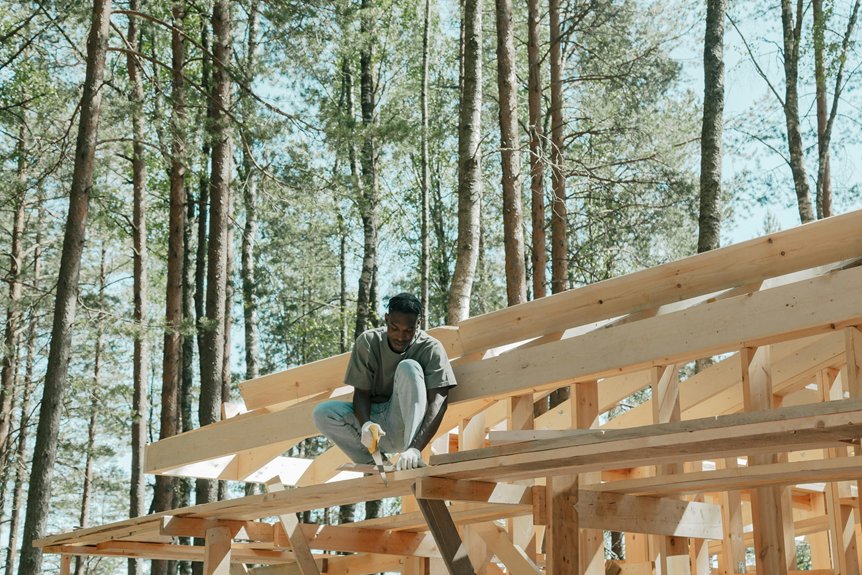
Mallard Construction and Roofing handles diverse project types, including residential, commercial, and specialized structures. You’ll find expertise in roofing installations—such as asphalt shingles, metal, or tile—plus remodeling, renovations, and custom builds. They emphasize quality craftsmanship, safety standards, and sustainable practices, ensuring durability and compliance. Whether you’re upgrading a home or managing a large commercial project, understanding these options helps you plan effectively. Continue to explore how each project type’s details can benefit your goals.
Understanding the Different Types of Construction Projects
Understanding the different types of construction projects is essential for determining the appropriate planning, resources, and expertise required.
When approaching commercial or industrial projects, you must prioritize specific design considerations, such as load-bearing capacity, material durability, and spatial functionality.
Safety protocols are paramount across all project types; you need to implement rigorous safety measures to protect workers and ensure compliance with OSHA standards.
In large-scale developments like shopping centers or office complexes, detailed site assessments and phased construction schedules are necessary to coordinate multiple trades efficiently.
For specialized projects—such as healthcare facilities or educational institutions—you’ll need to incorporate industry-specific regulations and accessibility requirements into your design considerations.
Recognizing the unique safety protocols and design considerations for each project type enables you to allocate resources effectively, mitigate risks, and adhere to legal and safety standards throughout the construction process, especially when working in regional climates that pose unique weather challenges.
Residential Roofing Projects: What Homeowners Need to Know
When undertaking residential roofing projects, homeowners must consider a range of technical factors to guarantee durability, safety, and long-term performance. Proper material selection is vital; asphalt shingles, metal roofing, and tile each have specific structural requirements and weather resistance characteristics.
Structural integrity involves evaluating roof load capacity, ensuring proper attachment to the underlying framing, and accounting for local climate conditions. Integrating garden landscaping elements, such as natural drainage solutions, can prevent water pooling and reduce structural stress.
Additionally, an interior redesign may influence attic ventilation and insulation strategies, affecting overall roof performance. Precise measurements and adherence to building codes are fundamental to avoid costly repairs.
Regular inspections, proper installation, and quality craftsmanship ensure the roof withstands environmental stresses over time. Trusted roofing services can help identify potential issues early and maintain your roof’s integrity. By paying close attention to these technical details, you optimize your investment, enhance home safety, and maintain aesthetic harmony with your landscaping and interior design.
Commercial Roofing Solutions for Business Properties
Selecting the appropriate roofing materials for your commercial property involves evaluating durability, thermal performance, and resistance to weather conditions.
Regular maintenance and timely repairs are essential to guarantee the roof’s lifespan and prevent costly damage.
Budget considerations must account for initial installation costs, ongoing upkeep, and potential future replacements to ensure a sustainable investment.
Roofing Material Options
Choosing the right roofing material for your commercial property involves evaluating durability, cost, and environmental resilience.
Shingle options, such as asphalt and architectural shingles, provide cost-effective, versatile solutions with moderate lifespan and ease of installation. These are suitable for low to moderate slope roofs.
Metal roofing, on the other hand, offers exceptional durability, high resistance to weather and impact, and excellent energy efficiency. This makes it ideal for long-term performance.
Metal roofs also feature a variety of finishes and styles, from standing seam to corrugated panels, providing customizable aesthetics.
When selecting between these options, consider factors like building structure, climate, and budget constraints.
Proper material choice guarantees maximum protection, sustainability, and compliance with local building codes, ultimately extending your property’s lifespan and reducing lifecycle costs.
Maintenance and Repairs
Regular maintenance and timely repairs are essential to preserving the integrity and performance of your commercial roofing system. Conducting regular roof inspections allows you to identify vulnerabilities such as surface damage, membrane deterioration, or embedded debris that could compromise waterproofing.
Detecting issues early enables targeted leak repairs, preventing escalation into extensive water intrusion or structural damage. During inspections, pay close attention to seam separations, flashing integrity, and membrane punctures.
Prompt leak repair minimizes material degradation and maintains energy efficiency. Use detailed diagnostics to determine whether repairs involve patching, membrane sealing, or component replacement.
Consistent upkeep not only extends your roof’s lifespan but also ensures compliance with safety standards, reducing long-term operational costs and avoiding costly emergency repairs.
Cost and Budgeting
Understanding the true costs of commercial roofing solutions is essential for effective budget planning and financial management. Accurate cost estimation involves evaluating material quality, labor rates, project complexity, and potential contingencies.
You must account for variables such as roof size, slope, existing conditions, and warranty options, which directly influence overall expenses. A detailed budget plan ensures you allocate sufficient funds for each phase, from procurement to installation and future maintenance.
Precise cost estimation helps identify cost-saving opportunities without compromising quality or durability. By systematically analyzing these factors, you prevent budget overruns and ensure project feasibility.
Effective budget planning requires thorough research, transparent vendor estimates, and contingency reserves, enabling you to manage financial risks associated with commercial roofing projects efficiently.
New Roof Installation vs. Roof Replacement: Which Is Right for You?
Determining whether to opt for a new roof installation or a full roof replacement depends on the current condition of your existing roof and your long-term goals.
If your roof has minimal structural damage but lacks energy-efficient features, a new installation allows for upgrades like integrating solar panels or green roofing systems.
A full replacement is necessary if there’s extensive damage, persistent leaks, or compromised structural integrity.
Consider the lifespan of your current roof; if it’s nearing the end of its expected life, replacing it ensures durability and energy savings.
For eco-conscious upgrades, green roofing can enhance insulation and reduce heat absorption, while installing solar panels benefits from a sturdy, modern roof.
When deciding, evaluate the cost-effectiveness of replacing versus repairing, factoring in potential future upgrades.
This technical assessment helps determine the most suitable approach to maximize your investment and achieve excellent performance and sustainability.
Remodeling and Renovation Projects: Transforming Your Property
When undertaking remodeling and renovation projects, carefully consider design and layout modifications to optimize space utilization and traffic flow.
Updating materials and styles guarantees your property aligns with current aesthetic standards and enhances durability.
Precise planning of these elements results in a cohesive transformation that meets both functional and visual objectives.
Design and Layout Changes
Implementing design and layout changes during remodeling or renovation requires careful planning to optimize both functionality and aesthetics. You must evaluate spatial flow, guaranteeing that room adjacencies support daily activities.
When adjusting layouts, consider how color schemes influence perception of space; lighter tones can make rooms feel larger, while darker shades add intimacy.
Landscaping options also play a crucial role in exterior design, complementing new layout modifications and enhancing curb appeal. Precise placement of pathways, planting beds, and outdoor features should align with the updated building footprint to create a cohesive visual transition.
Structural modifications, such as removing or adding walls, demand detailed load analysis to maintain stability.
Careful integration of these elements ensures your project achieves the desired balance between practical use and visual harmony.
Material and Style Updates
Updating materials and styles during a remodeling project involves selecting finishes, fixtures, and design elements that align with your desired aesthetic while guaranteeing durability and functionality. Focus on integrating high-quality decorative accents, such as trim, moldings, and hardware, to enhance visual appeal.
Carefully choose color schemes that complement the overall design, creating cohesive and harmonious spaces. Material choices, including flooring, countertops, and wall coverings, should meet performance standards for wear resistance and ease of maintenance.
Consider the texture and finish of surfaces to add depth and interest. Precise coordination of these elements ensures a seamless transition between styles and a long-lasting result, balancing aesthetic appeal with structural integrity and practicality.
Custom Building Projects: From Foundations to Finishes
From the initial planning stages through to the final touches, custom building projects require meticulous coordination of each phase to ensure both structural integrity and aesthetic precision. You’ll start with detailed site analysis and foundation design, tailored to support specific features like a custom kitchen or outdoor patios.
During framing, precise measurements and material selection are critical to accommodate custom fixtures and finishes. Electrical and plumbing systems are integrated early to meet your specifications, especially for high-end appliances or outdoor kitchen setups.
Interior finishes demand careful selection of materials, textures, and colors to match your vision. Exterior elements, such as patios, involve precise planning for drainage, foundation support, and durable surface materials.
Throughout, you’ll work closely with architects and contractors to guarantee each detail aligns with your design goals, resulting in a seamless blend of functionality and visual appeal from foundation to finish.
Specialty Construction Services: Siding, Insulation, and More
Specialty construction services such as siding, insulation, and weatherproofing play a critical role in enhancing the durability, energy efficiency, and aesthetic appeal of your building.
Selecting the right siding options involves considering material durability, maintenance needs, and visual impact, with choices such as fiber cement, vinyl, or metal siding, each offering distinct advantages.
Proper insulation methods are essential for controlling thermal transfer; options include spray foam, fiberglass batts, and rigid board insulations, which must be carefully applied to eliminate thermal bridging and air leaks.
These systems work together to improve energy performance and protect against moisture intrusion, mold, and structural damage.
Precise installation ensures ideal performance, requiring attention to detail in weatherproofing techniques like flashing, sealants, and vapor barriers.
Incorporating the right combination of siding options and insulation methods directly impacts the building’s longevity, energy costs, and visual coherence.
How to Choose the Right Project Type for Your Goals and Budget
Selecting the appropriate project type for your construction needs requires a clear understanding of your specific goals and budget constraints. Begin with detailed budget planning to identify financial limits and prioritize essential features.
Consider the scope of work, project complexity, and long-term value to determine whether a minor repair, renovation, or new construction best aligns with your objectives.
When evaluating project types, contractor selection plays a vital role; choose a contractor experienced in your desired scope to guarantee accurate cost estimates and adherence to project timelines.
Communicate your goals clearly to gauge their understanding and expertise.
An informed decision hinges on balancing project complexity with available funds, avoiding overspending on unnecessary features.
The Step-by-Step Process for Each Construction & Roofing Project
To guarantee a successful construction or roofing project, following a structured, step-by-step process is essential.
Initially, you’ll conduct a comprehensive site assessment, considering factors like existing structures, environmental conditions, and historical preservation constraints.
Next, you define project scope, emphasizing sustainable design principles to minimize environmental impact and enhance energy efficiency.
Design development involves creating detailed blueprints that incorporate sustainable materials and adhere to historical preservation guidelines where applicable.
Procurement then secures appropriate materials, balancing durability, eco-friendliness, and compliance with preservation standards.
Construction or roofing execution follows, with rigorous quality control, ensuring work aligns with technical specifications and preserves the integrity of historic features if relevant.
Finally, a thorough inspection confirms project completion, addressing any deficiencies.
Throughout each phase, communication with stakeholders and adherence to safety protocols maintain project integrity, ensuring the final result is both environmentally responsible and respectful of the site’s historical significance.
Why Partnering With Mallard Construction and Roofing Ensures Success
Partnering with Mallard Construction and Roofing guarantees access to a team with extensive expertise and proven experience in delivering complex projects on schedule.
Our rigorous quality craftsmanship standards and adherence to industry best practices ensure durable, compliant results.
Additionally, our reliable project management system coordinates every phase, mitigating delays and optimizing resources for consistent success.
Expertise and Experience
Because of their extensive industry background and specialized training, Mallard Construction and Roofing consistently deliver high-quality results that meet rigorous standards. Their expertise enables precise assessment and swift response to storm damage, minimizing structural compromise and guaranteeing compliance with safety regulations.
When handling insurance claims, their experience streamlines documentation and negotiations, reducing project delays. You benefit from their deep understanding of roofing systems, materials, and local building codes, which is vital for restoring properties efficiently and effectively.
Their team’s familiarity with complex storm-related issues ensures repairs address underlying vulnerabilities, preventing future damage. Partnering with Mallard means leveraging their proven track record in managing diverse project scopes, from emergency repairs to comprehensive reroofs, ensuring your project’s success from start to finish.
Quality Craftsmanship Standards
Mallard Construction and Roofing upholds strict quality craftsmanship standards that set them apart in the industry. You benefit from meticulous adherence to building codes, ensuring fire safety measures are integrated into every project phase, reducing risk and enhancing occupant security.
Their skilled technicians use premium materials and precise techniques to deliver durable, high-performance structures with minimal environmental impact. The company’s focus on sustainable practices includes waste reduction, eco-friendly insulation, and low-impact roofing solutions, aligning with environmental standards.
Attention to detail in installation processes guarantees maximum energy efficiency and long-term resilience. By partnering with Mallard, you ensure your project meets rigorous safety, environmental, and quality benchmarks, resulting in a superior, compliant, and sustainable outcome that stands the test of time.
Reliable Project Management
Effective project management is essential to guarantee that every phase of your construction or roofing project proceeds on schedule, within budget, and according to specifications. At Mallard Construction and Roofing, meticulous project scheduling aligns tasks with resource availability and critical deadlines, minimizing delays.
Our contractor selection process emphasizes experience, reliability, and all-encompassing understanding of project scope, ensuring skilled teams handle each phase. We implement detailed timelines, monitor progress through real-time updates, and adapt quickly to unforeseen challenges.
This systematic approach reduces risks, controls costs, and maintains quality standards. Partnering with us means you benefit from disciplined coordination and oversight, which keeps your project on track from inception to completion.
Reliable project management is the backbone of successful project delivery, and Mallard Construction and Roofing delivers nothing less.
Conclusion
Choosing the right construction or roofing project depends on your specific needs, budget, and long-term goals. By understanding the different types of projects—whether it’s a new roof installation, renovation, or specialty service—you can make informed decisions. Partnering with Mallard Construction and Roofing guarantees expert guidance, precise execution, and lasting results. For more information on how to schedule your free roof inspection, call us at (405) 543-2920 or visit us online at Top View Roofing. Trust our detailed process and industry experience to deliver solutions that meet your technical requirements and exceed your expectations.