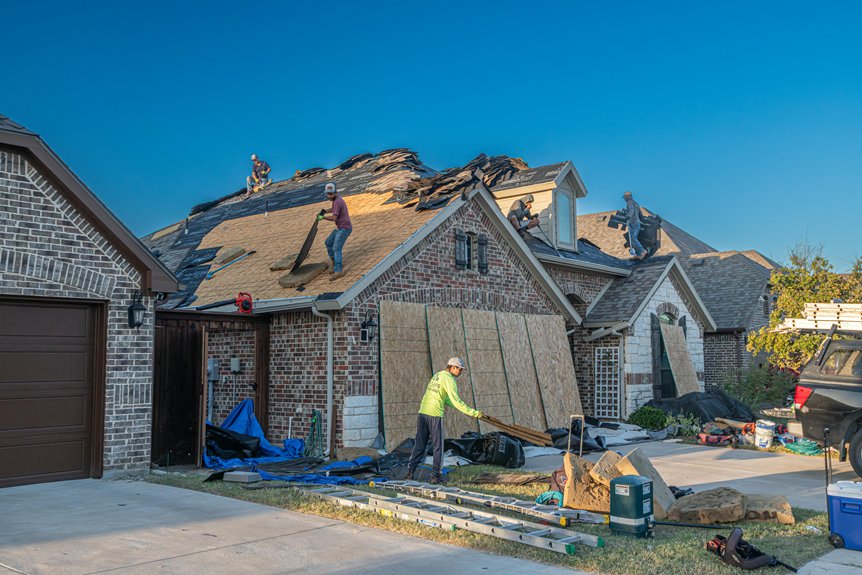
When planning for a roof replacement in Edmond, OK, you might wonder how long the process will take. Several factors, like the size and complexity of your roof, the materials chosen, and weather conditions, can influence the timeline. Understanding these aspects helps you prepare better and set realistic expectations. But what exactly determines the duration, and how can you guarantee everything stays on schedule? Let’s explore the key elements that impact your roof replacement’s timeframe.
Factors Affecting the Duration of Roof Replacement
Several factors can influence how long a roof replacement in Edmond, OK, takes. One major aspect is the type of roofing warranties you select, which can affect material choices and installation time. Some warranties require specific products or procedures, potentially extending the process.
Financing options also play a role; if you choose to finance your project, coordinating payments and approval times may add delays. Additionally, the size and complexity of your roof, as well as weather conditions, impact the timeline.
Access to your property and the availability of materials can further influence how quickly the work is completed. Being aware of these factors helps you plan better and set realistic expectations for your roof replacement. Proper workmanship and attention to detail ensure your roof’s longevity and durability, which can also affect the overall project duration.
Typical Timeline for a Standard Roof Replacement
A typical roof replacement in Edmond, OK, usually takes about one to three days to complete, depending on the size and complexity of your roof.
The type of roof material you choose impacts the timeline; for example, asphalt shingles generally install faster than metal or tile.
Labor efficiency also plays a vital role—skilled crews can work more quickly without sacrificing quality.
During these days, your contractor will remove the old roof, prep the surface, and install the new materials.
Weather conditions can influence the schedule, but under normal circumstances, a standard replacement stays within this timeframe.
Ensuring proper project planning and choosing experienced professionals help guarantee your roof replacement proceeds smoothly and efficiently.
Impact of Roof Size and Complexity
The size and complexity of your roof considerably influence the duration and effort required for a replacement. A larger roof naturally takes more time to remove and replace, extending the project duration.
Similarly, roof complexity—such as multiple levels, steep slopes, or intricate designs—adds to the workload, requiring more careful planning and specialized labor. These factors can notably increase installation time compared to a simple, straightforward roof.
If your roof has numerous vents, chimneys, or valleys, expect additional work and longer project hours. Understanding how your roof’s size and complexity impact the timeline helps you set realistic expectations and coordinate with your contractor more effectively.
Ultimately, these elements play a key role in determining how long your roof replacement will take.
Material Choices and Their Installation Times
Choosing the right roofing materials substantially impacts the installation timeline, as different options vary in complexity and preparation requirements.
For example, asphalt shingles are quick to install with straightforward techniques, typically taking less time.
Metal roofing, known for its durability, often requires specialized installation techniques, which can extend the process.
Material durability influences not only longevity but also installation complexity; more durable materials like clay tiles or slate may need additional preparation and skill, adding to the timeline.
Some materials demand precise handling and extra steps, such as underlayment or specific fastening methods.
Preparing Your Home for Roof Replacement
To guarantee a smooth roof replacement process, you need to prepare your home ahead of time. Begin by scheduling a roof inspection to identify any underlying issues that might delay the project.
Clear your driveway and yard of vehicles, outdoor furniture, and other obstructions to provide easy access for the roofing crew.
Remove any debris, such as leaves or branches, from your roof and gutters to prevent interference during installation.
Protect delicate outdoor items and trim back trees or bushes near the roof to avoid damage.
Inform your neighbors about the upcoming work to prevent surprises.
Taking these steps ensures the crew can work efficiently, reducing delays and helping your roof replacement stay on schedule.
Weather Conditions and Their Effect on Project Schedule
Weather conditions can considerably impact the timeline of your roof replacement. Storm delays are common in Edmond, especially during severe weather seasons, causing work stoppages and rescheduling.
Heavy rain or high winds can make it unsafe for contractors to work on your roof, adding unexpected delays.
The seasonal impact also plays a role; winter weather with snow and ice can slow down progress, while hot summer days may require adjustments to work hours.
Unpredictable weather patterns mean your project might take longer than initially planned.
Staying flexible and communicating regularly with your contractor helps manage expectations.
Ultimately, understanding how weather influences your roof replacement ensures you’re prepared for potential delays and can coordinate accordingly.
The Role of Roofing Contractors in Project Duration
Roofing contractors play a crucial role in determining how long your roof replacement takes. Effective contractor communication ensures everyone stays on the same page, reducing delays caused by misunderstandings or misaligned expectations.
Good project management is essential to keep the work on schedule, coordinating tasks efficiently and allocating resources properly. Your contractor’s ability to plan the project timeline, manage crew schedules, and troubleshoot issues quickly directly impacts the overall duration.
Clear communication also helps address unforeseen problems promptly, preventing unnecessary holdups. When your contractor stays organized and communicates effectively, the project moves smoothly from start to finish.
This proactive approach minimizes disruptions, ensuring your roof replacement stays within the expected timeframe.
Common Delays and How to Minimize Them
Many common delays during roof replacements stem from issues like material shortages, scheduling conflicts, or unforeseen structural problems. Material selection plays a big role—if your chosen materials aren’t available or delivered late, the project stalls. To mitigate this, work closely with your contractor to confirm material availability early in the process.
Clear contractor communication is essential; ask your contractor to keep you informed about potential delays and to coordinate schedules efficiently. Unexpected structural issues can also cause delays, so having a thorough initial inspection helps identify problems beforehand.
Staying proactive and maintaining open communication with your contractor ensures everyone’s on the same page, reducing setbacks and keeping your roof replacement on track.
Signs That Your Roof Replacement Is Near Completion
As your roof replacement nears completion, there are clear signs to watch for that indicate the project is winding down. One key sign is the completion of the final roof inspection, where the contractor reviews the work to make sure everything meets safety and quality standards.
You’ll likely notice that material delivery has stopped, signaling that all necessary supplies have been used. Additionally, the crew will wrap up their work, removing debris and equipment from your property.
You might also see the installation of final touches, like flashing or sealants. These indicators show that the main construction is finished, and the project is close to completion.
Keep an eye out for these signs to know when your new roof is almost ready for use.
Tips for Planning Around Your Roof Replacement Schedule
Planning around your roof replacement schedule guarantees the process causes minimal disruption to your daily life. Start by setting a realistic timeline that considers your work and family commitments.
Budget considerations are vital—know your financing options and get clear estimates from your contractor to avoid surprises.
When selecting a contractor, choose someone reputable with experience in Edmond OK to guarantee quality work and timely completion.
Communicate your schedule preferences early, so they can plan accordingly.
Prepare your property by clearing driveways and securing outdoor furniture.
If you have flexible dates, coordinate with your contractor to find the best window for installation.
Proper planning minimizes inconvenience, keeps costs in check, and guarantees your roof replacement proceeds smoothly.
Conclusion
In Edmond, a roof replacement typically takes between 1 to 3 days. However, factors such as the size and complexity of your roof, as well as weather conditions, can influence the timeline. Planning ahead and collaborating with experienced contractors helps ensure a smooth process. To learn more about scheduling your free roof inspection, call us at (405) 543-2920 or visit us online at Top View Roofing. Keep realistic expectations, stay in communication, and prepare your home properly. With the right approach, you’ll have your new roof installed efficiently, providing lasting protection for your home.